
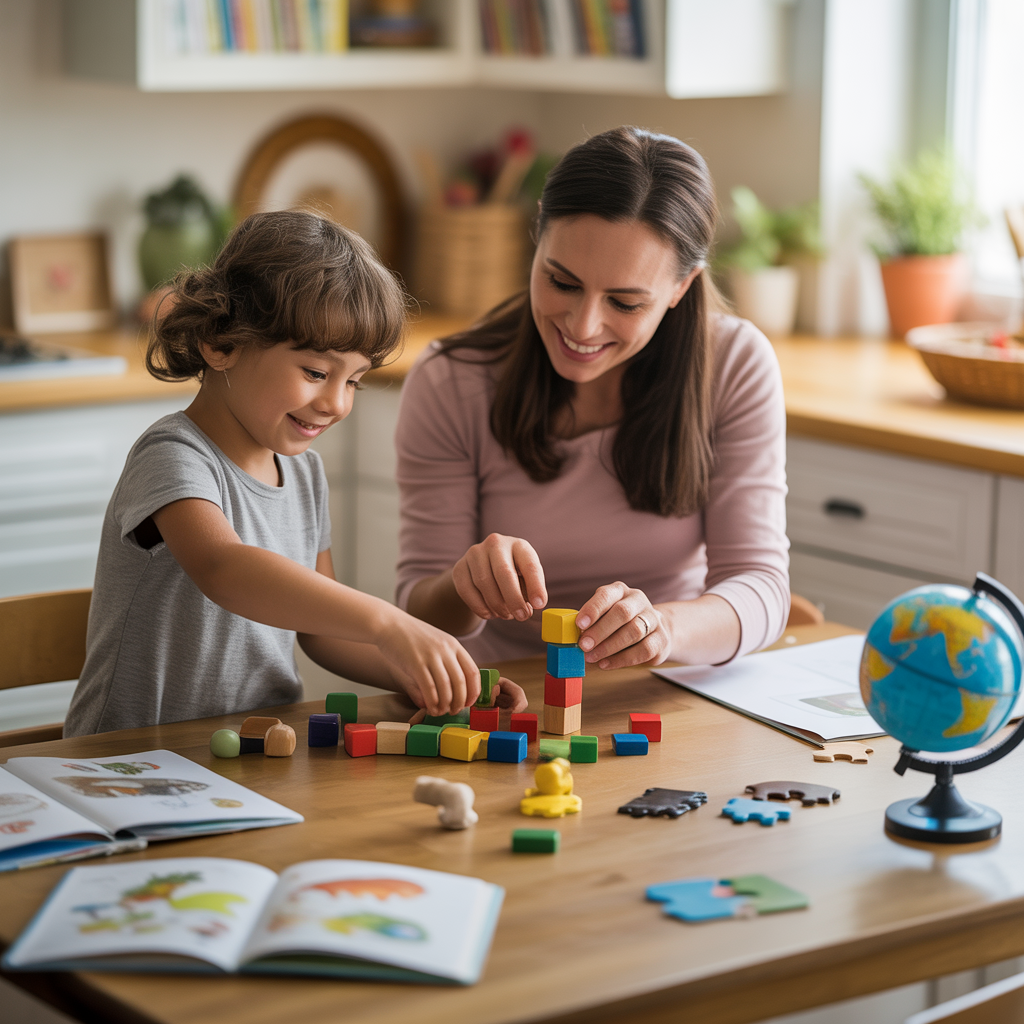
Parenting today is not what it used to be. Parents are struggling to balance their careers, stress, digital distractions, high academic expectations, and rapidly evolving technology while striving to raise grounded, emotionally healthy, and successful children. Children do not simply develop productivity, focus, or discipline. That’s something you work at out of intention, repeatedly and with lots of patience in your home every day.
New research regarding psychology, child development, and neuroscience indicates that children learn productivity through environment, routines, emotional support, and opportunities for solving problems. Not through lectures or pressure. When families build structures that empower curiosity, independence, and cool-headed thinking, we achieve a world full of capable adults. This post goes in depth on ten research-based approaches that parents can apply to instill a life of productivity and emotional resilience.
- Establish Routines That Build Discipline
Children thrive in predictable environments. When parents establish predictable routines, children learn to interpret time, manage tasks, and develop self-control almost without thinking. It’s not so much schedules as routines, the mostly unconscious, invisible scaffolding of life that spins the days into a pattern on which you can place a name: school or church or playgroup; contributions in relationships and later, work.
A productive routine includes:
- A consistent morning rhythm
- A distraction-free set time to study
- Predictable meal and sleep times
- Controlled screen exposure
- Daily small responsibilities
These patterns tell children that life has structure, and success comes from consistently repeated habits. If in their adolescence, young professionals tend to distinguish themselves in difficult environments, they frequently refer not only to relatives and friends but also childhood habits as guarantors of discipline and emotional balance.
- Encourage Independent Thinking
Kids gain confidence when they are given opportunities to make decisions that are appropriate for their age. Independence is not a characteristic; it’s a learned skill. When kids have a chance to pick out their own clothing, decide on their snacks, play a role in planning part of their day, or help find the solution to an easy household problem, they start seeing themselves as competent human beings.
Parents can support independence by:
- Children can also be asked straightforward reflective questions (“What do you think is best?”)
- Offering choices rather than issuing commands
- Embracing mistakes and learning from them
Compound these guided decisions with fortified neural pathways to vast resources for problem-solving, creativity, and long-term confidence. Trust your kids to think for themselves, and they’ll likely grow up to be able to make tough decisions under pressure, like treating patients, running a company, or launching a rocket.
- Build a Growth Mindset
A growth mindset is the belief that skills are cultivated through effort, strategies, and mentorship rather than innate talent. When parents practice and celebrate effort, kids come to see that improvement is always possible. This belief fuels them to withstand with optimism and persistence.
Parents can:
- Praise effort rather than intelligence
- Model and reduce the fear of making mistakes through learning
- Celebrate attempts at challenging tasks
- Frame setbacks as opportunities
Kids with growth mindsets get better grades, are more emotionally resilient, and turn out to be better athletes, artists, hobbyists, and side-hustlers.
- Ensure the Home Environment Is Conducive to Learning
Home is the first school of the child. A space specifically meant for learning structures their curiosity, focus, and intellectual confidence. Kids reared with libraries that contain books, tools, quiet spaces, and visible pathways to pursue ideas will always remain lifelong learners.
A supportive learning home includes:
- A dedicated study area
- Visible books and educational materials
- Calm, structured places for reading
- Tools for creativity and experimentation
- Family routines that celebrate curiosity
Even the slightest environmental cues, whether a reading corner or that kit of microscopes and science materials you’ve set up in your home lesson area (a.k.a., the dining room table, anyone?), tell children learning is something that’s valued and, even better still, encouraged.
Trade it up. Parents can also help teach responsibility by explaining how tools work every day. For example, they could show how a piece of equipment, like a tractor, helps families get work done and that every job takes effort and purpose.
Parents can also teach responsibility by explaining how everyday tools work, for example, showing how equipment like a tractor helps families get work done, reinforcing that every job requires effort and purpose.
- Teach Responsibility Through Real-Life Experiences
You don’t learn responsibility by hearing about it; you learn it by living it. As children observe the consequences of their actions, manage small responsibilities feel trusted with a balance of power, the internal drive to do right emerges. This part will lead to being responsible, self-sufficient, and hard-working.
Parents can:
- Assign age-appropriate chores
- Involve children in household decisions
- Encourage self-organising habits
- Allow natural consequences
- Teach them stewardship of belongings
Uncover the secret to raising responsible children- Responsibility is a central part of character formation, and we get there one day at a time. When kids learn at an early age that they can profit from personal responsibility, they may never shake it!
- Prioritise Emotional Intelligence (EQ)
Emotional intelligence is as important as acing a math or English exam. A child who can access self-awareness, empathy, and emotional vocabulary can deal with stress, school pressure, and social conflicts, and life’s disappointments infinitely better than a child who can’t articulate their feelings.
Parents can build EQ by:
- Listening actively
- Naming emotions without judgment
- Demonstrating calm behaviour
- Encouraging empathy and perspective-taking
Children with high EQ excel academically, build stronger relationships, and enjoy a more optimal quality of life by understanding and managing their emotions.
- Celebrate Small Wins
Success is thousands of tiny, invisible efforts. When they receive recognition for their effort on important tasks (homework, clean-ups, goal-setting), children are more likely to persevere. But recognition has to be pure and easy.
Parents can say:
- “I saw how hard you worked.”
- “You pushed through when it was hard.”
- “Great job being responsible.”
- These mini celebrations are to encourage good habits that will be with a child for life.
- Strengthen Parent-Child Communication
Open, thoughtful communication creates trust. Kids feel safer and are more willing to problem solve when they trust their parents will truly listen without immediately critiquing. This emotional safety is the basis of healthy behaviour.
Parents can:
- Hold regular check-ins
- Ask deeper, open-ended questions
- Tell simple anecdotes about their youth
- Don’t lecture; instead, work out solutions together
This is when children build resilience, a sense of worth , and confidence in dealing with problems.
- Promote Healthy Digital Habits
Technology is inevitable, but untrammelled screen time diminishes attention, sleep, and creativity. Good parenting involves teaching digital balance.
Healthy digital habits include:
-
- Scheduled screen limits
- Clear rules for online safety
- More real-life hobbies (sports, reading, art)
- Prioritising educational apps over games
These habits can help children develop self-control, prevent digital burnout, and engage fully in both online and offline life.
- Demonstrate the Behaviour You Want to Exemplify
Children mirror what they observe. A parent who reads, plans, takes responsibility, exercises steady emotional management, and carefully solves problems is going to naturally raise a child who does the same.
Parents can model by:
- Demonstrating calm decision-making
- Showing how to fix mistakes
- Practising self-care
- Maintaining routines and commitments
- Kids learn much more from examples than from explanations.
- Final Thoughts
Efficient parenting is not perfection; it´s consistency. Parents who provide structured routines, emotional security, and good communication, and encourage a learning environment, are giving children the greatest gift: competence to succeed anywhere in the world.
These kids are coming of age ready for any path, whether creating new ventures in the United States, becoming doctors in the U.K., lawyers in Germany, or serving as leaders back at home. Productivity isn’t the entire academic success; it’s a lifelong attitude inculcated at home, one day and one lesson (in math, or life) at a time.