
For centuries, humans have searched for ways to think more clearly, remember more accurately, and maintain focus for longer periods. What once began as ritual, fasting, and herbal experimentation has evolved into neuroscience, nutrition, and brain stimulation technologies. Today, this pursuit is known as cognitive enhancement, a field that blends biology, chemistry, and technology in an effort to improve how the brain functions without compromising long-term well-being.
Rather than chasing shortcuts or extreme productivity hacks, this article explores how the brain can perform better when it works in balance. It focuses on clarity, memory, and mental endurance that align with the brain’s natural rhythms.
If you are interested in improving focus, learning capacity, and mental endurance without burnout, understanding how nootropics and brain stimulation truly work is the first step.
The Origins of Cognitive Enhancement
The desire to enhance the mind is not a modern invention. Across early civilizations, humans used spiritual and physical practices to access altered states of perception. Shamans relied on herbs and rhythmic sound, monks practiced fasting and chanting, and philosophers experimented with diet and sensory restriction. These approaches were not designed for productivity as we define it today, but they revealed a consistent truth: mental states can be influenced.
During the Renaissance, thinkers began to see intelligence as something trainable rather than fixed. Observations about sleep, diet, and environment showed that cognitive performance fluctuated based on physical conditions. This understanding expanded during the industrial era, when caffeine and nicotine became common tools for concentration and endurance.
However, the early chemical shortcuts of the 20th century revealed a crucial limitation. Stimulants could increase alertness, but often at the cost of exhaustion, dependency, and long-term decline. These outcomes shaped the modern concept of cognitive enhancement, one that values safety and sustainability as much as performance.
What Defines a True Nootropic
The term “nootropic” was introduced in the 1970s to describe substances that enhance learning, memory, and attention without causing harm. This definition marked an important distinction between sustainable cognitive support and forced stimulation.
Modern nootropics are not limited to pills or compounds. They include:
- Nutrients that support neurotransmitter balance
- Diets that stabilize energy and focus
- Light exposure and sleep regulation
- Meditation and breathwork
- Neurofeedback and brain stimulation technologies
What unites these methods is their goal: improving communication between neurons while maintaining internal balance. Enhancement that ignores recovery, rhythm, and self-awareness ultimately undermines itself.
The Brain as an Electrical and Chemical System
Every thought, memory, and decision is driven by electrical signals moving through neural networks. These signals travel across neurons and synapses, forming patterns that define how efficiently the brain processes information.
Brain activity operates within frequency ranges known as brainwaves:
- Beta waves support active thinking and problem-solving
- Alpha waves enable relaxed focus
- Theta waves are linked to creativity and insight
- Delta waves dominate deep sleep and recovery
External stimulation, such as light, sound, rhythm, or electrical current, can encourage the brain to spend more time in specific frequency ranges. This is why certain music enhances focus, why light affects alertness, and why sleep is essential for memory consolidation.
Alongside electricity, chemistry gives these signals meaning. Neurotransmitters such as dopamine, serotonin, acetylcholine, and GABA regulate motivation, calmness, memory, and inhibition. Their levels are influenced daily by movement, sunlight, breathing, social interaction, and nutrition.
Too much stimulation in any direction can disrupt emotional stability, impulse control, or clarity. Sustainable enhancement requires moderation and awareness.
How Stimulation Influences Learning and Memory
One of the most significant discoveries in neuroscience is neuroplasticity, the brain’s ability to reorganize itself in response to experience. Learning strengthens certain neural pathways while weakening others, allowing skills and knowledge to become more efficient over time.
Stimulation is most effective when paired with active learning. For example:
- Focused practice strengthens neural circuits
- Immediate feedback accelerates adaptation
- Alternating focus with rest improves retention
- Short learning cycles outperform prolonged strain
Respecting the brain’s natural ultradian rhythms, cycles of energy and recovery throughout the day, enhances creativity and memory formation. Enhancement is not about constant activation, but intelligent timing.
Direct Brain Stimulation and Its Limits
Technologies such as transcranial direct current stimulation (tDCS), transcranial alternating current stimulation (tACS), and transcranial magnetic stimulation (TMS) apply weak electrical or magnetic forces to specific brain regions. These methods do not force neurons to fire. Instead, they make existing activity slightly more efficient.
When applied correctly, tDCS has shown modest improvements in:
- Attention
- Reaction time
- Task-specific learning
- Short-term mental clarity
The effects are temporary and depend heavily on proper placement, duration, and purpose. Overuse can lead to adaptation or fatigue, reinforcing the principle that enhancement should support learning, not replace it.
Vagus nerve stimulation, which influences stress, digestion, and emotional regulation, further demonstrates how interconnected the brain and body truly are. These tools highlight potential, but also raise ethical and practical questions about dependency and identity.
Chemical Enhancement and the Role of Moderation
Chemical stimulation has been used throughout history, from caffeine to coca leaves to synthetic compounds. The difference between benefit and harm often lies in dosage and timing.
Some compounds temporarily increase flexibility in neural patterns, allowing novel connections and creative insights. However, these effects require recovery and reflection to translate into lasting improvement. Without integration, stimulation becomes destabilizing.
This is why contemporary neuroscience emphasizes cycles:
- Activation
- Integration
- Rest
True enhancement strengthens the brain’s ability to function independently, rather than creating reliance on external inputs.
Food as the Most Accessible Nootropic
Nutrition remains the safest and most reliable form of cognitive enhancement. Omega-3 fatty acids support neuron structure, magnesium stabilizes neural activity, and antioxidants protect against cellular stress.
Certain foods provide gentle, consistent benefits:
- Coffee supports dopamine and alertness
- Honey sustains energy levels
- Dark chocolate supports serotonin balance
When consumed mindfully and in alignment with circadian rhythms, food becomes a form of self-regulation rather than stimulation. It enhances existing pathways instead of overwhelming them.
Brain Mapping and Neuroplastic Adaptation
Efforts to map the brain have revealed functional regions linked to vision, memory, language, and motor control. However, these maps are approximations. The brain does not operate with rigid boundaries.
Neural activity varies between individuals and even within the same person, depending on context. Language, emotion, and experience can shift how memories are accessed and stored. This variability explains why no single enhancement method works universally.
Neuroplasticity allows the brain to adapt after injury, learning, or stimulation by forming new pathways. This adaptability is the foundation of cognitive resilience and long-term improvement.
Sustainable Enhancement as a Long-Term Strategy
Effective cognitive enhancement shares several defining characteristics:
- It works with natural rhythms, not against them
- It balances stimulation with recovery
- It avoids dependency and burnout
- It preserves self-awareness and presence
Electrical, chemical, and nutritional tools are best understood as bridges. They can reveal potential and accelerate learning, but they cannot replace deliberate practice, reflection, and rest.
The future of brain optimization lies not in control, but in alignment.
Conclusion
Nootropics and brain stimulation offer powerful insights into how cognition can be supported and refined. When guided by neuroscience, balance, and ethical awareness, these tools can enhance focus, learning, and creativity without compromising mental health.
Unlock the Full Potential of Your Brain
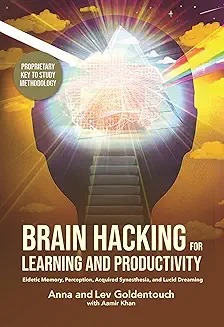
If this exploration of nootropics and brain stimulation sparked your curiosity, Brain Hacking for Learning and Productivity: Eidetic Memory, Perception, Acquired Synesthesia, and Lucid Dreaming is your next step. The book dives deeper into how the brain truly learns, adapts, and evolves, offering a clear, structured understanding of cognitive enhancement grounded in neuroscience, balance, and self-awareness. It is designed for readers who want lasting mental clarity, stronger memory, and sustainable performance without burnout.
Turn Insight into Action with ProlificFocus
Knowledge becomes powerful when applied. The ProlificFocus: Wellbeing, Hobbies and Sleep-Hacking Masterclass transforms these brain-hacking principles into practical strategies you can use daily. The course focuses on optimizing focus, restoring energy, and improving sleep, helping you build a lifestyle that supports high performance and mental resilience over the long term.
📩 Simply contact me at info@keytostudy.com to access the ProlificFocus course and start building a sharper, calmer, and more productive mind.