
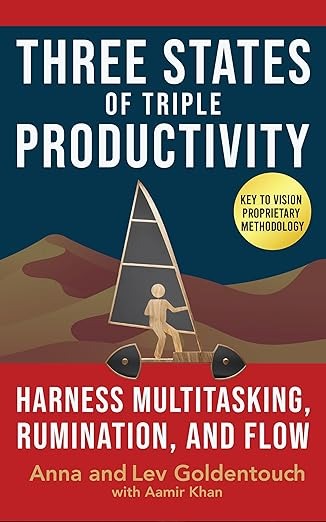
Productivity is often misunderstood as doing more in less time. Japan offers a radically different lesson: productivity is about removing what does not matter. This idea is explored in depth in the book THREE STATES OF TRIPLE PRODUCTIVITY: Harness Multitasking, Rumination and Flow, presenting productivity as a structured process of reducing waste and improving intentional action.
Japan’s rise, stagnation, and continued relevance tell a deeper story about efficiency, restraint, and intentional work. From post-war scarcity to global manufacturing dominance, Japanese productivity emerged not from excess resources, but from discipline, awareness, and waste elimination. These lessons extend far beyond factories. They apply to knowledge work, creativity, learning, and daily life.
This article explores how Muda-awareness, the Toyota Production System, and the bold idea of No Buffers combine into a unified philosophy of focused, high-quality productivity.
The Historical Roots of Japanese Productivity
Japan’s productivity advantage did not appear suddenly in the 20th century. It emerged from centuries of rapid adaptation and disciplined learning.
In 1543, the arrival of matchlock guns triggered an arms race that led Japan to surpass Europe in firearm production within a single generation. Centuries later, Japan’s victory in the Russo-Japanese War (1904–1905) demonstrated its ability to absorb, modernize, and outperform global powers.
After World War II, Japan faced devastation, scarcity, and limited resources. Instead of collapse, the country rebuilt with a mindset centered on efficiency, affordability, and waste avoidance. Cheap bicycles and compact cars were not compromises. They were expressions of a deeply ingrained cultural value: never waste what is limited.
This mindset reached its peak during the 1970s and 1980s. While oil crises exposed the weaknesses of abundance-based economies, Japan thrived by maximizing value within constraints. The result was extraordinary growth, followed by the sobering collapse of the asset bubble in 1991. Even systems built on discipline are not immune to external shocks.
Yet the underlying principles endured.
Muda: The Foundation of Waste-Aware Productivity
At the core of Japanese efficiency lies Muda, a term that means waste. Muda-awareness is not limited to factories. It permeates everyday life, work, design, and decision-making.
Muda-awareness encourages constant questioning:
- Does this action add value?
- Is this step necessary?
- Can this be simplified or removed?
This philosophy gave rise to practices such as Kaizen (continuous improvement) and Kanban (just-in-time coordination). Rather than dramatic overhauls, progress happens through small, steady refinements.
Muda-awareness is visible in minimalist aesthetics, organized workspaces, and systems designed to prevent excess before it appears.
Craftsmanship and Group Harmony
Japanese productivity is not mechanical. It is deeply human.
Craftsmanship
Generations of artisans cultivated an obsession with precision and quality. From samurai swords to bullet trains, the focus is not speed, but doing things right the first time. This mindset naturally reduces waste by preventing defects, rework, and inefficiency.
Group Harmony (Wa)
Productivity is a collective responsibility. Collaboration, shared ownership, and mutual accountability reduce friction and duplication of effort. Innovation emerges through alignment rather than competition.
Together, craftsmanship and harmony transform productivity into a cultural value rather than a performance metric.
The Toyota Production System: Productivity as Flow
The Toyota Production System (TPS) represents the most refined expression of Japanese productivity thinking. Born from scarcity and shaped by experimentation, TPS focuses on eliminating three enemies of efficiency:
The Three Evils
- Mura (Unevenness) – Irregular workflows and chaotic demand
- Muri (Overburden) – Excessive strain on people or systems
- Muda (Waste) – Anything that consumes resources without adding value
TPS does not chase speed. It creates flow.
Jidoka: Quality First
The origins of TPS trace back to Sakichi Toyoda’s automatic loom, which stopped itself when a defect occurred. This principle, automation with human judgment, prioritizes quality over output and prevents waste at the source.
The Seven Forms of Muda
Taiichi Ohno identified seven universal forms of waste to make inefficiency visible and therefore removable. While these categories originated in manufacturing, they apply equally to knowledge work, learning, decision-making, and creative output. Muda often hides inside routines that feel productive but fail to deliver proportional value.
Understanding these seven forms creates a structured way to analyze where energy, time, and attention are being consumed without meaningful return. The goal is not minimal effort, but maximum value with minimal friction.
1. Inventory
Inventory represents anything accumulated beyond immediate need, such as physical materials, unfinished tasks, excessive notes, or outdated information. While accumulation may feel like preparation, it often creates hidden costs by tying up attention and delaying completion.
Excess inventory increases mental load, slows decision-making, and raises the risk of obsolescence. Productive systems aim for clarity and flow, keeping only what is relevant and actionable at the present moment.
2. Transportation
Transportation waste refers to the unnecessary movement of materials, documents, data, or even ideas. Each transfer introduces friction, delays, and the potential for miscommunication or loss.
In cognitive and professional work, excessive handoffs, duplicated file transfers, and scattered tools interrupt flow. Efficient systems minimize movement by placing resources where they are needed, when they are needed.
3. Motion
Motion waste occurs when people or systems perform inefficient or repetitive actions that add no value. This includes poorly arranged workspaces, unclear procedures, or fragmented digital environments.
Unnecessary motion increases fatigue and error rates while reducing focus. Thoughtful design, ergonomic layouts, and simplified workflows help conserve energy for higher-level thinking and execution.
4. Waiting
Waiting is time lost between dependent steps, pauses caused by delayed responses, unclear priorities, or bottlenecks in the workflow. While waiting may seem unavoidable, much of it stems from poorly aligned processes.
Waiting disrupts momentum and breaks concentration. Reducing dependencies, clarifying responsibilities, and improving coordination restores continuity and preserves productive flow.
5. Overproduction
Overproduction means creating more than what is currently required, earlier than needed, or at a higher level of detail than necessary. This often leads to excess work, unused output, and increased maintenance effort.
In intellectual work, overproduction can take the form of excessive planning, over-researching, or generating outputs that are never fully used. Effective productivity aligns effort directly with real demand and purpose.
6. Overprocessing
Overprocessing occurs when unnecessary complexity is added to tasks, systems, or outputs. This may involve excessive features, overly detailed documentation, or elaborate processes that exceed actual requirements.
Complexity often feels sophisticated, but it increases confusion and slows execution. Simplicity enhances clarity, reduces errors, and allows value to emerge more cleanly.
7. Defects
Defects are errors that require correction, rework, or repetition. They consume time, energy, and attention while undermining quality and confidence.
Preventing defects through clarity, standards, and thoughtful design is far more efficient than fixing mistakes later. High-quality systems prioritize doing things right the first time.
Minimalism as a Productivity Strategy
Removing waste naturally leads to minimalism. Not aesthetic minimalism, but functional elegance.
A streamlined system resembles an aerodynamic design: every unnecessary element removed improves performance. Whether in writing, research, or planning, clarity emerges when excess disappears.
Minimalism supports focus, reduces cognitive load, and enhances decision-making.
From Multitasking to Mindful Flow
Context-switching is one of the most overlooked forms of waste. Constantly shifting attention fragments energy and reduces output quality.
TPS principles encourage:
- Standardized routines
- Reduced distractions
- Clear task boundaries
The result is flow, a state of deep engagement where effort feels effortless, and results improve naturally.
Flow is not accidental. It is designed.
No Buffers: When Safety Nets Become Waste
Buffers, extra time, resources, or slack, are often introduced to manage uncertainty. While necessary in unpredictable situations, buffers can become hidden waste in repeatable tasks.
The No Buffers philosophy challenges the assumption that padding always improves performance. Inspired by Just-in-Time thinking, it suggests that in mastered activities, buffers:
- Mask inefficiencies
- Reduce urgency
- Interrupt flow
When processes are well understood, precision outperforms excess.
The Mastery Mindset
Masters work differently from beginners. Their actions are fluid, automatic, and responsive.
Through practice, repetition, and feedback, complex tasks shift from conscious control to intuitive execution. This frees mental resources for strategy and creativity.
Flow emerges when:
- Skill matches challenge
- Attention remains undivided
- The process becomes intrinsically rewarding
Mastery is not rigidity. It is refined adaptability.
Balancing Precision and Planning
No Buffers does not mean recklessness. Critical tasks still demand careful planning and margin for error. The key distinction lies between:
- Routine, repeatable work → lean, buffer-free execution
- High-risk, high-impact work → deliberate preparation
Productivity aligns best when systems reflect values, not dogma.
Practical Takeaways from Muda Thinking
- Identify activities that add little or no value
- Simplify workflows before accelerating them
- Standardize small, repetitive tasks
- Visualize work to expose bottlenecks
- Improve continuously through small steps
Conclusion: The Real Miracle of Japanese Productivity
The Japanese productivity miracle is not about copying systems. It is about adopting a way of thinking.
True efficiency emerges when waste is removed, focus is protected, and effort is aligned with meaning. Productivity is not about doing everything. It is about doing what matters, with intention and clarity.
Unlock Your Full Productivity Potential
Dive deeper into THREE STATES OF TRIPLE PRODUCTIVITY: Harness Multitasking, Rumination, and Flow, where multitasking, reflection, and flow come together into a complete productivity framework.
Apply these principles in real life with the ProlificFocus: Productivity Masterclass (Time Management, Multitasking and Flow), designed to transform theory into actionable systems you can use every day.
📩 Contact: info@keytostudy.com
Reach out now for exclusive course discounts and start eliminating wasted effort to make your work more effective than ever.
The real productivity miracle isn’t in Japan, it’s in discovering how much better your work becomes when waste disappears.