
Most people believe the core problem of productivity is a lack of time. Days feel short, tasks pile up, and no matter how many hours are invested, results often fall short. The truth is simpler and more uncomfortable: more hours do not automatically create more output. Productivity is not a time problem. It is a resource management problem.
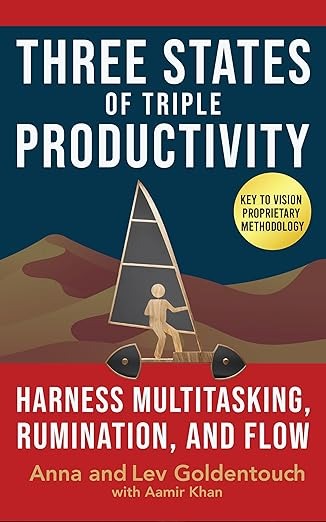
This idea is explored deeply in the book THREE STATES OF TRIPLE PRODUCTIVITY: Harness Multitasking, Rumination and Flow, a framework that challenges the obsession with longer workdays and replaces it with smarter strategies for time perception, prioritization, tools, delegation, and controlled multitasking.
Understanding productivity begins with one critical shift: you do not need more time, you need better leverage over the time you already have.
The Myth of “Not Enough Time”
Complaints about time are universal. Children want longer weekends, professionals wish for longer days, and older individuals often feel life itself is too short. Yet despite this shared frustration, very few people use their existing time effectively.
Human limitations make perfect productivity impossible. Focus fades, motivation fluctuates, boredom creeps in, and distractions constantly compete for attention. Even when attention is fully engaged, inefficient methods and unnecessary details often consume valuable hours without meaningful results.
Research highlights another constraint: the average attention span is extremely short. Constant interruptions fragment thinking and make sustained effort difficult. This explains why simply adding more hours rarely improves outcomes.
Productivity Is About Leverage, Not Endurance
Highly productive days are not created by skipping sleep or working until exhaustion. They are created by changing how time feels and how much output fits into it.
Two levers matter:
- The subjective experience of time
- The number of meaningful outcomes produced per hour
When productivity increases, the need for recovery increases as well. Short breaks, deliberate pauses, and structured work cycles become essential. Productivity resembles sprinting more than marathon running. While sustained intensity is unrealistic for most people, short, focused bursts are achievable for almost everyone.
This makes productivity a personal balance, not a rigid system. The goal is not maximum output every day, but sustainable high-impact effort over time.
Six Ways to Extract More Value From the Same Day
Rather than adding hours, productivity improves by changing how hours are used. Several approaches consistently multiply results:
1. Improve Method Efficiency
Learning faster methods compounds time savings. Reading faster, writing more clearly, analyzing more directly, and brainstorming more effectively all reduce effort while increasing output.
2. Reduce Poor Decisions and Procrastination
Many delays are not logistical but psychological. Readiness, preparation, and mental resistance often matter more than schedules.
3. Trade Money for Time
In many cases, money is cheaper than time. Better equipment, professional services, and optimized resources can save hours that cannot be recovered otherwise.
4. Enable Flow States
When all required resources are available, deep focus becomes possible. Even short periods of flow can produce disproportionate results.
5. Use Multitasking Carefully
When done intentionally and correctly, multitasking can act as a time multiplier rather than a distraction.
6. Extend Time Subjectively
Time feels longer when filled with meaningful or unique experiences. Practices such as meditation slow perceived time and make days feel fuller without adding hours.
Why Prioritization Becomes Non-Negotiable
As productivity improves, the volume of possible work expands. Eventually, prioritization becomes more important than efficiency.
The Pareto Principle illustrates this clearly: a small portion of effort produces the majority of results. High-impact tasks deserve immediate attention, while low-impact tasks should be delayed, delegated, or eliminated.
Effective productivity depends on prioritization, decision quality, and effective time management rather than extending work hours.
Practical Focus
Tasks should be evaluated based on:
- Impact on outcomes
- Time and energy required
- Opportunity cost of delay
This ensures energy is spent where it creates the greatest return.
The Hidden Power of the Right Tools
One of the simplest ways to save time is also the most overlooked: using the right tools.
Tools include more than hardware. They encompass:
- Knowledge and know-how
- Equipment and materials
- Digital systems
- Third-party services
The best tool is rarely the most expensive. It is the simplest reliable option that performs consistently with minimal maintenance. Overly complex tools drain time through setup, customization, and upkeep.
Fewer Tools, Better Results
Owning too many tools reduces mastery. Practice time gets fragmented, familiarity drops, and efficiency suffers. A small set of high-quality tools encourages repetition, refinement, and speed.
This principle applies across professions. Streamlining tools reduces cognitive load, minimizes clutter, and accelerates execution.
Ownership also matters. Tools that belong to everyone belong to no one. Responsibility ensures maintenance, consistency, and readiness.
Buying Time With Money: When It Works and When It Fails
Exchanging money for time is one of the oldest productivity strategies. When used correctly, it frees attention for higher-value work. When used poorly, it creates friction and hidden costs.
Where Buying Time Makes Sense
- Hiring experts for specialized knowledge
- Outsourcing narrow, repetitive tasks
- Delegating work with clear outcomes
Specialists perform tasks faster because they repeat them constantly. Learning everything personally is rarely efficient when expertise is readily available.
Where Caution Is Required
- Poorly defined tasks
- Quality-sensitive work
- High coordination overhead
- Excessive personal services that disrupt workflow
Delegation succeeds only when expectations are clear, and results can be evaluated.
Trust, Transparency, and Verification
Long-term relationships with service providers create trust, shared language, and efficiency. Transparency allows risks and delays to be anticipated early.
However, trust should never replace understanding. Even without deep expertise, it is essential to:
- Define desired outcomes
- Ask informed questions
- Verify critical decisions
- Seek second opinions when the stakes are high
Know-what and know-how are different skills. Effective productivity requires oversight, not blind reliance.
Understanding Good vs Bad Multitasking
Multitasking is neither universally harmful nor universally helpful. Its value depends on control, timing, and task type.
Understanding the difference between good and bad multitasking is essential, as intentional multitasking can multiply output, while uncontrolled multitasking reduces performance and increases risk.
Good Multitasking
Good multitasking is intentional and controlled. It typically:
- Uses different sensory channels
- Fills idle or waiting time
- Allows tasks to be paused safely
- Has minimal risk if interrupted
Examples include pairing low-cognitive activities with passive listening or managing tasks that require infrequent attention.
Bad Multitasking
Bad multitasking occurs when:
- Two tasks demand full focus
- Emotional engagement interferes with safety
- Interruptions create errors
- Attention switches involuntarily
This form of multitasking degrades performance and increases risk.
Multitasking should serve productivity, not compete with attention.
Multitasking vs Flow: Choosing the Right Mode
Multitasking and flow compete for the same mental resources. Flow requires deep immersion and minimal interruptions. Multitasking requires control and flexibility.
Designing work around attention, energy, and focus allows individuals to build sustainable productivity pipelines and flow instead of relying on urgency or constant effort.
The key is timing. Multitasking fits energetic periods with predictable workloads. Flow fits protected time blocks with clear goals. Mixing the two without intention reduces both effectiveness and satisfaction.
Practical Productivity Without Burnout
True productivity is not about constant intensity. It is about:
- Strategic effort
- Intelligent delegation
- Minimal friction
- Controlled focus
- Sustainable energy use
Short, focused bursts combined with rest outperform prolonged strain. When productivity increases, recovery becomes part of the system, not a failure of discipline.
Conclusion: Productivity Is a Design Problem
Productivity does not begin with calendars or longer hours. It begins with designing how attention, tools, money, and focus interact.
By:
- Leveraging subjective time
- Prioritizing high-impact tasks
- Choosing simple, reliable tools
- Buying time strategically
- Multitasking with intention
It becomes possible to produce more without working longer.
Unlock Triple Productivity Without Burnout
These principles are explored in depth in the book THREE STATES OF TRIPLE PRODUCTIVITY: Harness Multitasking, Rumination and Flow, a practical guide designed to help you work smarter, think clearer, and achieve meaningful results without exhausting yourself.
If you are ready to go beyond theory and start applying these ideas in real life, the ProlificFocus: Productivity Masterclass (Time Management, Multitasking and Flow) provides step-by-step guidance, proven frameworks, and actionable strategies to help you regain control of your time and attention.
For exclusive discounts on the course, feel free to reach out directly:
📧 info@keytostudy.com
Productivity is not about having more hours.
It is about making every hour count.