
Most students believe that studying harder means reading more slowly, analyzing every sentence, and constantly measuring progress. In reality, this approach often leads to stress, overload, and declining comprehension. When attention is fragmented and timing is ignored, even the best study techniques fail.
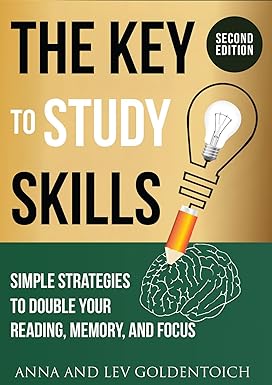
This problem, focusing on how to read instead of what and when to read, lies at the heart of ineffective learning. The Key to Study Skills (2nd Edition): Simple Strategies to Double Your Reading, Memory, and Focus addresses this challenge by presenting a powerful framework built around priming, timing, and structured focus, helping readers align their study habits with how the brain naturally processes information
Instead of forcing concentration, this approach aligns with how the brain actually processes information, by preparing before reading, focusing fully during reading, and analyzing afterward. The result is higher reading speed, stronger memory, and less mental fatigue.
Why Timing Matters More Than Effort
A common mistake in studying is trying to do everything at once: reading, analyzing, memorizing, and evaluating performance simultaneously. This overloads working memory and leads to stress, distraction, and frustration.
Effective learning depends on timing cognitive tasks correctly:
- Preparation happens before reading
- Focus happens during reading
- Analysis and evaluation happen after reading
When these stages are mixed, the brain is forced into constant context switching, which slows reading and weakens comprehension.
Multitasking: When It Helps and When It Hurts
The Hidden Cost of Bad Multitasking
Multitasking is often blamed for poor focus, and for good reason. Human working memory can hold only 7±2 objects at a time. When too many tasks compete for this limited space, performance drops sharply.
Bad multitasking includes:
- Reading while analyzing each sentence
- Measuring progress repeatedly during reading
- Worrying about performance instead of content
This type of multitasking increases stress and causes attention to drift away from the text.
Good Multitasking Through Structure
Not all multitasking is harmful. Structured multitasking works by replacing, not stacking, mental tasks. Instead of juggling tasks simultaneously, the brain switches context in a controlled sequence:
- Read a paragraph
- Pause to interpret meaning
- Store the insight
- Return to reading
This is similar to how complex calculations are performed, one complete operation at a time. When applied correctly, this method improves both speed and comprehension.
Reducing Stress to Unlock Learning Capacity
Stress consumes mental energy that could otherwise be used for understanding and memory. High stress levels also increase compulsive behaviors such as constant self-measurement and overanalysis.
Effective strategies for reducing study-related stress include:
- Relaxation and mindfulness practices
- Physical activity and adequate sleep
- Reducing stimulants like caffeine and sugar
- Practicing gratitude to shift perspective
A calm mind processes information faster, retains more details, and sustains focus longer.
Measure Progress, But Not Too Often
Constant performance tracking can be counterproductive. Measuring reading speed or study output multiple times a day increases anxiety and distracts from content.
A more effective approach:
- Measure performance once per week
- Focus only on metrics that truly matter
- Avoid compulsive tracking
Letting go of excessive measurement frees cognitive resources and often leads to rapid improvement without additional effort.
The Preread–Read–Analyze Cycle
Why Reading Should Be a Single-Purpose Activity
The brain is not designed to read and analyze at the same time. When both happen together, working memory overload occurs, slowing reading and reducing retention.
The preread–read–analyze cycle solves this by separating mental tasks:
- Preread to prepare the brain
- Read with full attention and no judgment
- Analyze afterward from multiple perspectives
This structure is a refined version of the SQ3R method, optimized for speed and retention.
Prereading: Preparing the Brain to Learn
Prereading is not fast reading. It is a filtering and priming process that prepares the brain for incoming information.
Key benefits of prereading:
- Removes emotional reactions before reading
- Creates mental markers for names, dates, and themes
- Establishes context for memory techniques
- Allows strategic decisions about what to read or skip
Prereading uses scanning and skimming to create an “inventory” of the text without engaging in deep comprehension.
Scanning vs. Skimming: Choosing the Right Tool
Skimming
Skimming involves rapid eye jumps between columns or text regions. Peripheral vision gathers information while attention focuses briefly on key areas.
Skimming is ideal for:
- Getting an overview
- Identifying structure and themes
- Training for fast context switching
Scanning
Scanning uses smooth, continuous eye motion through entire paragraphs or zigzag patterns across lines.
Scanning is best for:
- Searching for specific information
- Reading wide text layouts
- High-speed reading with retention
Advanced readers switch between scanning, skimming, and detailed reading based on purpose.
Eidetic (photographic) Memory and Visual Markers
Eidetic memory is often misunderstood. It is temporary but trainable. By visualizing text layouts and recalling spatial positions, readers create strong visual anchors for information.
Training eidetic memory involves:
- Holding images in mind for several seconds
- Recreating details mentally
- Gradually increasing text size
- Using spatial position as a recall cue
Once markers are stable, visualization becomes automatic and faster.
Perception, Speed, and Pattern Recognition
Fast scanning depends on the brain’s ability to recognize familiar patterns in a flood of information. Improving perception speed allows readers to detect meaningful content instantly.
Techniques include:
- Differentiating symbols, letters, and numbers
- Using color associations
- Training rapid visual discrimination
As perception speed increases, scanning becomes more accurate and less tiring.
Consciousness and Attention Dissociation (CAD)
Many students read text while thinking about something else. This phenomenon, consciousness and attention dissociation, drastically reduces retention.
When consciousness drifts:
- Attention becomes selective
- Visual markers weaken
- Doubt and overthinking increase
Effective solutions include:
- Reading enjoyable material to rebuild flow
- Separating reading and analysis clearly
- Increasing reading speed to prevent mental wandering
Paradoxically, reading faster often improves retention by keeping consciousness fully engaged.
The Power of Priming Before Reading
Priming is the act of asking the right questions before reading. The brain filters information based on expectations, and priming sets those expectations intentionally.
Effective priming questions include:
- Why am I reading this?
- How will I use this information?
- Which details matter most?
- How does this connect to what I already know?
Priming increases comprehension, strengthens memory, and improves motivation.
Reading Through Multiple Perspectives
Understanding deepens when information is viewed from multiple angles. Perspective-based thinking allows readers to extract meaning beyond surface details.
Useful perspectives include:
- Practical application
- Logical structure
- Emotional tone
- Creative associations
- Contradictions and counterarguments
Each perspective adds color, detail, and connectivity to mental markers.
Anchors, Prediction, and Retrieval
Some markers act as anchors, central reference points that support many related details. Anchors improve long-term retrieval by linking questions with answers.
Prediction further strengthens learning:
- Anticipate what the author will say
- Compare predictions with actual content
- Adjust understanding accordingly
This internal dialogue keeps the brain actively engaged.
Innovation Focus: Choosing What to Remember
Not all content deserves equal attention. High-speed reading requires intentional prioritization.
Effective prioritization strategies:
- Focus on differences from existing knowledge
- Remember trends instead of exact numbers
- Identify 3 key takeaways per article
- Strengthen markers for high-priority ideas
Every prioritization strategy should be paired with a slower revisit option for filling gaps.
Working Memory and Chunking
Working memory limits how much information can be processed at once. Chunking expands this capacity by grouping related elements.
Instead of remembering:
- 5 separate objects
Train to remember:
- 5 groups of 4 objects
This increases effective capacity to about 20 elements, enough for most text sections.
The KeyToStudy Memory Training Schedule
Memory training is the foundation of advanced study skills. The KeyToStudy Memory Training Schedule provides a structured 6-week progression:
- Weeks 1–2: Visualization and marker creation
- Week 3: Applying memory to real texts
- Weeks 4–5: Speedreading mechanics and eye control
- Week 6: Advanced integration and daily use
Consistent daily practice, even 30 minutes, leads to measurable improvements in speed, retention, and confidence.
Conclusion: Study Smarter by Priming, Timing, and Focus
Effective studying is not about pushing harder; it is about aligning with how the brain works. By separating preparation, focus, and analysis, using structured multitasking, and leveraging priming and perspectives, learning becomes faster, clearer, and more sustainable.
These principles are explored in full detail in The Key to Study Skills (2nd Edition): Simple Strategies to Double Your Reading, Memory, and Focus, a practical guide to mastering reading speed, memory, and focus without stress.
If you want to go deeper and apply these techniques systematically, the KeyToStudy: Memory Masterclass provides structured training, guided exercises, and progressive skill development.
📩 For exclusive course discounts and enrollment details, contact:
info@keytostudy.com
Master your timing, prime your mind, and let focus work for you, not against you.