
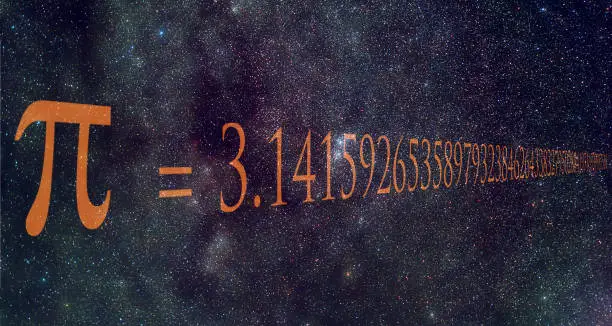
Memorizing the first 300 digits of pi may sound like an impossible feat to many, but anyone can accomplish it with the right techniques, mindset, and motivation. Pi (π), the irrational number that begins with 3.14159, has fascinated mathematicians, scientists, and memory champions for centuries. Whether you’re a math enthusiast, a competitive memorizer, or simply someone who loves brain challenges, learning these digits can be both a mental workout and a delightful journey into the world of numbers and patterns. This guide will not only show you how to memorize the first 300 digits of pi, but it will also highlight fun facts, historical trivia, and powerful memorization techniques used by memory athletes around the world. Along the way, you’ll uncover how mnemonic systems, chunking strategies, and storytelling methods can turn abstract numbers into something vibrant and unforgettable. Let’s dive into the wonderful, quirky, and rewarding challenge of committing pi to memory.
Understanding the Importance of Pi
Pi (π) is the ratio of the circumference of a circle to its diameter. It’s one of the most important constants in mathematics, showing up in everything from geometry and trigonometry to physics and engineering. The digits of pi never end and never repeat, making it a true mathematical mystery. Historically, civilizations like the Babylonians and Egyptians approximated pi, but modern computation has revealed billions—even trillions—of its digits.
Memorizing a small portion of pi, such as the first 300 digits of pi, has become a mental sport. Known as “piphilology,” the practice of memorizing and reciting pi digits often takes center stage on March 14 (Pi Day). People do it for personal challenge, to sharpen memory skills, or just for the fun of impressing friends and peers.
Why Memorize the First 300 Digits of Pi?
There are several compelling reasons to challenge yourself with this mental feat:
- Mental Fitness: Memorizing pi strengthens your brain’s memory centers.
- Discipline: It requires consistency and dedication, instilling a sense of achievement.
- Cognitive Skills: It enhances focus, attention span, and numerical recall.
- Cool Party Trick: It’s an undeniably impressive ability!
Most importantly, it teaches you to approach learning in creative, personalized ways—skills that transfer well into academics and professional life.
The Psychology Behind Memorization
The brain doesn’t naturally store long strings of numbers with ease. Instead, it excels at storing images, emotions, patterns, and stories. That’s why memory champions use techniques rooted in the brain’s natural strengths:
- Visualization: Turning numbers into images.
- Association: Linking images with familiar places or experiences.
- Chunking: Grouping numbers into memorable segments.
These psychological principles form the foundation for pi memorization methods.
Getting Familiar with the First 300 Digits of Pi
Let’s take a look at the actual first 300 digits of pi (after the 3 and decimal):
1415926535 8979323846 2643383279 5028841971 6939937510
5820974944 5923078164 0628620899 8628034825 3421170679
8214808651 3282306647 0938446095 5058223172 5359408128
4811174502 8410270193 8521105559 6446229489 5493038196
4428810975 6659334461 2847564823 3786783165 2712019091
4564856692 3460348610 4543266482 1339360726 0249141273
7245870066 0631558817 4881520920 9628292540 9171536436
7892590360 0113305305 4882046652 1384146951 9415116094
3305727036 5759591953 0921861173 8193261179 3105118548
0744623799 6274956735 1885752724 8912279381 8301194912
Look overwhelming? Let’s break it down.
1. Chunking – Organize for Efficiency
What it is:
Chunking means breaking down a long sequence into smaller, more manageable groups—just like how we memorize phone numbers (e.g., 0321-9876543).
How to use:
Instead of memorizing “1415926535,” split it like this:
- 14159
- 26535
Or even:
- 14 – 15 – 92 – 65 – 35
Why it works:
Short-term memory holds 7±2 chunks. By grouping numbers, you reduce cognitive load.
- Major System – Convert Numbers to Sounds, Then Words
What it is:
The Major System converts digits into consonant sounds, which you then turn into words by adding vowels.
Number-Sound Mapping:
| Digit | Sound | Example |
| 0 | S, Z | Zoo |
| 1 | T, D | Toe |
| 2 | N | Knee |
| 3 | M | Moo |
| 4 | R | Row |
| 5 | L | Law |
| 6 | J, SH, CH | Shoe |
| 7 | K, G (hard) | Cow |
| 8 | F, V | Fee |
| 9 | P, B | Bee |
How to use:
Let’s take “314”:
- 3 = M
- 1 = T
- 4 = R
Make a word: Meter, Motor, or Mother.
Then make a sentence:
- “A meter falls off the wall.” (Picture that vividly.)
Do this for each chunk, then link the sentences.
3. Memory Palace (Method of Loci) – Place Numbers in Locations
What it is:
Imagine a familiar place (your home, school, or route to work), and mentally place information in specific spots along a path.
How to use:
Assign 5 digits of pi to each room:
- Front Door: 14159 (imagine a giant stopwatch ticking)
- Living Room: 26535 (picture a dancing robot balancing on a pipe)
- Kitchen: 89793 (visualize balloons shaped like 8s and 9s bursting)
Walk through your palace mentally to recall each set.
Why it works:
Your brain remembers visual and spatial information much better than abstract digits.
4. Storytelling – Turn Numbers into a Narrative
What it is:
Turn each chunk or transformed word (from Major System) into characters or events, and build a story.
Example:
Digits: 14159
Words from Major System: Tire (T-R), Lip (L-P)
Story: “A tire rolled into a lipstick store and knocked over a shelf.”
The sillier and more emotional, the better—it sticks longer!
5. Rhymes & Songs – Set Numbers to Rhythm
What it is:
Create poems, songs, or raps where the number of letters in each word equals the digit you’re memorizing.
Example:
“Now I, even I, would celebrate, in rhymes unapt, the great immortal syllable Pi.”
Count letters:
- Now = 3
- I = 1
- Even = 4
- I = 1
- Would = 5
- Celebrate = 9
→ 3.14159
You can create your piem (pi poem) or hum tunes with digit-based beats.
6. Color Coding & Visual Patterns – Use the Eyes
What it is:
Assign each digit a color, shape, or symbol to make visual patterns.
How to use:
- 1 = 🔴 Red
- 2 = 🔵 Blue
- 3 = 🟢 Green
…and so on.
Write pi in these colors or arrange beads/stickers. Helps visual learners.
- Dominant System – Great for Person-Action Imagery (Advanced)
This one is more advanced and popular with memory athletes.
What it is:
Every two-digit number is turned into a person and an action.
Example:
- 32 = Charlie Chaplin (C = 3, B = 2)
- 79 = Sylvester Stallone (S = 7, N = 9)
How to use:
- 3279 = Charlie Chaplin (person) punching (action of Stallone)
Build bizarre, fun scenes: “Charlie Chaplin punches a lion in the bathtub!”
8. Digital Tools & Apps
Combine mnemonic systems with technology:
- Anki (spaced repetition flashcards)
- Memorize Pi App
- PiTrainer
- Quizlet flashcard sets
These help reinforce memory over time.
Combine Multiple Methods
For maximum memorization:
- Chunk digits
- Convert chunks using the Major System.
- Place those in your Memory Palace
- Tie it together using Storytellin.g
- Reinforce with Anki and daily tests.
Final Mnemonic Example (First 10 Digits: 3.1415926535)
Using the Major System + Story:
- 3 (M), 1 (T), 4 (R) → Motor
- 1 (T), 5 (L), 9 (P) → Tulip
- 2 (N), 6 (J), 5 (L) → Angel
- 3 (M), 5 (L) → Mail
Story: A motor crashes into a giant tulip, and an angel appears, holding the mail.
Now, picture it vividly, walk through it daily, and boom—the digits stick!
Fun Fact: Who Holds the Record?
The world record for reciting pi from memory belongs to Rajveer Meena from India, who recited 70,000 digits in 2015. He wore a blindfold and recited for over 9 hours.
This feat shows the power of mental techniques like those we’ve discussed. You don’t need to reach 70,000—the first 300 digits of pi is a noble (and way more manageable) milestone.
Fun Fact: How Pi is Computed
Modern supercomputers have calculated over 100 trillion digits of pi. People do this not just for fun but also to test computing hardware and software.
Fun aside: The first time computers reached 1 million digits of pi was in the 1970s. That seems small now!
Building Emotional Associations
Associate the numbers with something personal—birthdays, anniversaries, favorite jersey numbers. Emotional connections deepen memory retention.
Example:
- 88 = your graduation year
- 07 = your birthday
- 65 = your house number
Create stories around those digits so they feel familiar.
Myths and Misconceptions About Pi
- Myth: All the digits eventually repeat.
Truth: Pi is irrational, so the digits go on infinitely without repetition. - Myth: Memorizing pi improves intelligence.
Truth: It improves memory skills and focus but doesn’t increase IQ directly. - Myth: Computers can calculate all digits of pi.
Truth: They can calculate more and more digits but never all of them.
Incorporate Music
Some enthusiasts compose songs using pi digits as musical notes. Music and melody can embed the numbers into long-term memory more easily.
You can even hum or sing your way through the first 300 digits of pi. It sounds odd, but it works surprisingly well for auditory learners.
Engage the Senses
Use multi-sensory methods. Read the digits aloud, write them with colorful pens, and trace them with your finger. The more senses involved, the deeper the learning.
The Role of Sleep and Rest
Sleep is vital for memory consolidation. A good night’s rest after studying pi can solidify what you’ve memorized. Avoid sleep deprivation while trying to master long sequences.
Celebrate Your Progress
Celebrate milestones:
- First 50 digits? Reward yourself.
- Did you make it to 150? Treat yourself to something fun.
- Hit 300? You’re now part of an elite club!
Recognizing progress boosts motivation and makes the journey enjoyable.
Use Social Media Challenges
Share your progress on platforms like Reddit (r/memory), Instagram, or TikTok. Accountability and encouragement from others can help you stay committed. Plus, it’s cool to show off your new skill!
Math Fun Fact: Pi Is Everywhere
Pi shows up in physics (wave functions), engineering (circuits), statistics (Gaussian distribution), and even nature (spirals of galaxies and pinecones). That’s why people want to know all digits of pi—it’s mathematically magical.
Bonus: How Long Does It Take?
Depending on your consistency and method, you can memorize the first 300 digits of pi in:
- 10–15 days with 20–30 digits/day
- 1 month with 10 digits/day and repetition
It’s not about speed; it’s about retention and enjoyment.
Inspirational Closing: You Can Do It
If you’ve ever wondered whether your brain is capable of extraordinary feats, memorizing the first 300 digits of pi is the perfect challenge to prove it. With fun strategies, daily practice, and a playful attitude, you can go from zero to 300 in no time.
Whether you’re doing it for a class competition, Pi Day celebration, or your achievement, remember: the journey itself is as rewarding as the goal.
Final Thought
Mastering the first 300 digits of pi is a journey that intertwines logic with creativity, repetition with novelty, and numbers with meaning. Along the way, you’ll use techniques grounded in psychology and memory science, connect with the deep historical and mathematical significance of pi, and—most importantly—unlock parts of your brain you may never have tapped into before.
And if you ever crave more, just know that others have gone on to memorize the “first million digits of pi” or even over “1 million digits of pi”—but 300 is an epic milestone all on its own.
Start now. Stay curious. And let the numbers guide your mind.