
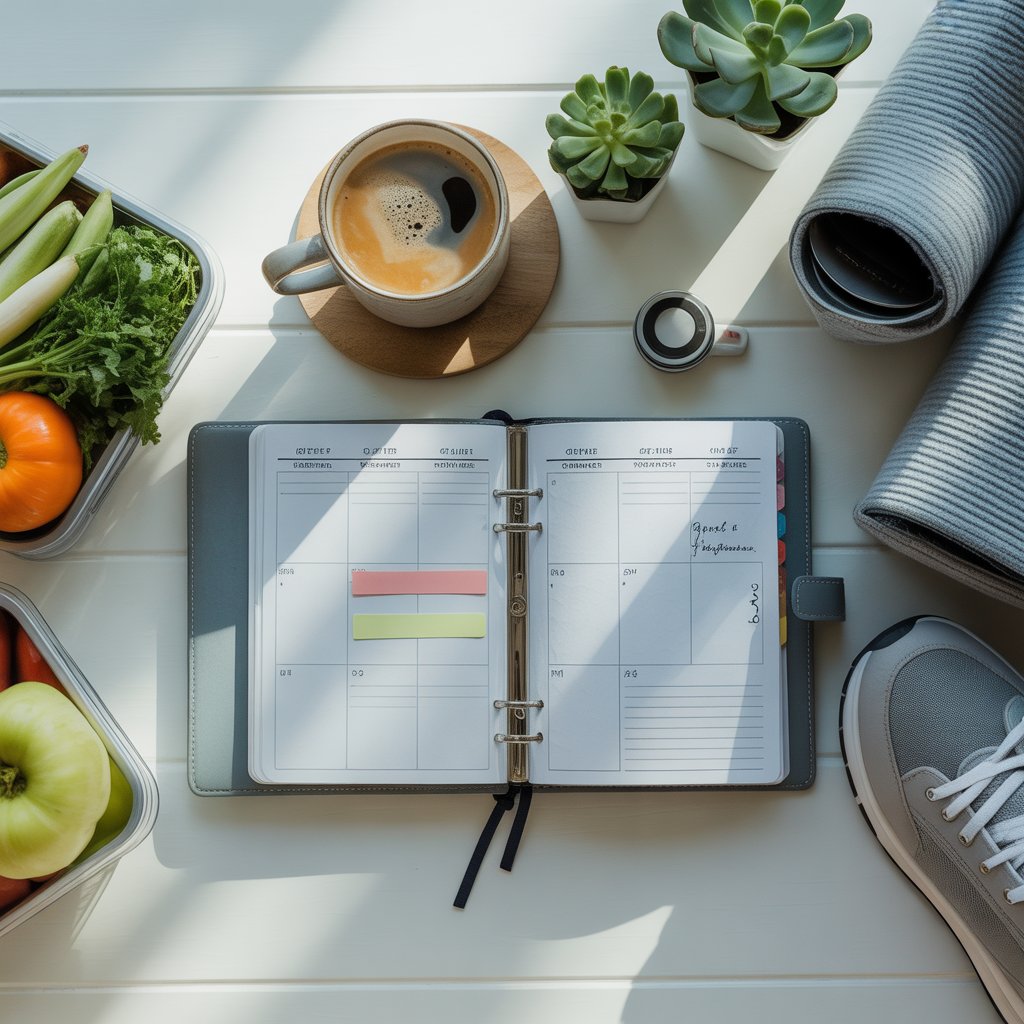
Weekends are not a two-day interval between deadlines, but the scaffold that makes or breaks your next week to be chaotic or focused. Routines that you develop on Fridays until Monday mornings determine energy, clarity, and momentum. This article will provide you with ten simple weekend habits to be able to come to Monday sure and in command.
1. Prep Sunday: the small tidy-up that changes your Monday
Take 30-90 minutes on Sunday evening to prepare a workspace, look through your schedule for the week, and create a 3 best priorities list to do on Monday. This little practice helps to alleviate decision fatigue and eliminate Monday mayhem.
Why it is effective: a concise summary and a clean-up operation decrease the mental load – when you sit down at your computer on Monday morning, you are aware of what is important. For practical Sunday prep ideas (tidying, meal prep, and Monday routines), see How to Learn to Love Mondays on KeyToStudy. (Key To Study)
Action steps:
- Clear a 30–60 minute block Sunday evening.
- Put tomorrow’s top 3 tasks in your calendar as time blocks.
- Lay out your outfit / pack your bag / create a Monday playlist to remove micro-decisions.
2. Design a sprint-friendly plan (pick 1–2 big wins)
The efficient week does not involve making the most of the busywork, but one that involves accomplishing a few significant things. Plan your week in sprints: a big win of high value at the end of each major work day and some guardrails around everything.
Practical setup:
- Identify one “big win” for Monday and Wednesday. These are the tasks that actually move your goals forward.
- Break each big win into 2–3 concrete sub-tasks and schedule the longest uninterrupted block for them first.
- Use a lightweight Pomodoro structure (90 min focused + 30 min processing) to protect deep work.
For a strategic view on peak performance, automation, and sprint vs. marathon thinking, see KeyToStudy’s article on reaching peak productivity. (Key To Study)
3. Prioritize one full rest session (real rest = better focus)
Rest isn’t optional. To put memory together, rejuvenate motivation, and minimize the risk of burnout, your brain requires rest. Turn one of your weekend days into a real low-demand, low-screen day, or an oriented weekend of healing, during which you devote yourself to sleep, low-vigor physical activity, and sensory rest.
What “real rest” looks like:
- Extra sleep, an afternoon walk, and at least one meal without screens.
- Swap small chores for time in nature or a low-effort hobby.
- Schedule a phone-free 2–4 hour window where you read, daydream, or create.
The idea of scheduling healing weekends and reserving time for long-form reading or side projects appears in KeyToStudy’s “Healing weekend.” Use it as inspiration for structuring restorative weekend space. (Key To Study)
4. Train attention: 10–20 minutes of visualization or focus exercise
Concentration is something to practice. A little practice every day, or every weekend, such as visualization, breathwork, or the black dot focus exercise, is better at helping you to overcome distraction and stay focused.
Suggested practice:
- 10 minutes: visualization/focus exercise (visualize a single object or a black dot and build detail).
- 5 minutes: breathing to settle the nervous system before work sessions.
- 10 minutes: a short planning ritual where you place the day’s priorities into your mental “circle of focus.”
For specific visualization exercises and step-by-step attention drills, KeyToStudy’s “Visualization focus training” offers practical exercises you can adopt over a weekend. (Key To Study)
5. Read strategically: make one weekend reading session count
Commit to one reading session as opposed to scattered shots. Regardless of whether you are researching, learning, or keeping up, set aside a block of time on the weekend to prerun or deep skim: either preparing a list of selected articles, skimming briefly (5-20 seconds) to get the context, then skimming rapidly through the ones you have flagged.
How to structure it:
- Saturday or Sunday: collect 10–20 short articles or one long essay.
- Use a preread pass: headlines, first and last paragraphs, subheads.
- Write a 5–10 word takeaway for each piece in a reading diary.
If you want to see how a heavy, intentional reading weekend can be organized (and the mental mechanics behind reading a large volume efficiently), see KeyToStudy’s “1000 articles per week.” Use the structure there to scale reading without burning out. (Key To Study)
6. Micro-clean your digital life: 30 minutes of declutter
Any friction on the internet (10 e-mail chains that have never been opened, a disorganized desktop, 20 open tabs) steals away energy. Restrict this break to 30-60 minutes on weekends: unsubscribe, archive, rename, and close.
Weekend digital checklist:
- Inbox: archive or unsubscribe to reach inbox-zero-ish.
- Desktop: create a “To Process” folder and move everything in one pass.
- Tabs: bookmark or “read later” the must-keep tabs; close the rest.
- Phone: delete or at least hide apps you overuse during the week.
Small digital resets translate into fewer context switches on Monday morning, which means more momentum.
7. Meal plan and simple food prep
The energy of the mind is food-dependent. A brief Sunday meal planning session will reduce decision overhead each day and avoid energy lapses.
Meal-prep steps:
- Batch-cook one protein and two easy sides (e.g., roasted veg + grains).
- Pre-pack breakfast items or overnight oats for fast mornings.
- Freeze or refrigerate labeled portions so Monday meals are automatic.
You don’t need to become a chef, just produce predictable meals to preserve willpower for high-leverage work.
8. Move your body: do one long-ish session or several mini-sessions
Movement during the weekend will reset hormones, enhance sleep, and enhance the clarity of mind. Select a pattern that you can stick to: a long hike, bike ride, weight, or three 20-minute walks that will be completed throughout the weekend.
Principles:
- Prefer low-to-medium intensity that you enjoy; consistency beats intensity.
- Combine outdoor time with movement if possible; nature doubles the restorative effect.
- Use movement as part of planning: go for a walk while thinking through the week’s big wins.
Movement is a surprisingly underrated productivity habit; it fuels focus and resilience for the coming week.
9. Progress-check: weekly review + quick planning ritual
One habit that is best for keeping oneself on track is a weekly review. Take 20-45 minutes on Sunday and review the previous week and synchronize the next ones.
Weekly review template (20–45 min):
- Wins: list 3 accomplishments (however small).
- Lessons: what got in the way? What helped?
- Priorities: set 3 objectives for the week (one big win + two supporting tasks).
- Calendar check: note meetings and pre-block time for your big work.
A short, consistent review prevents slow drift and lets you correct course before Monday morning.
10. Protect one small creative project or hobby
Long-term improvements (learning, writing, side projects) do take place on weekends. Keep at least one such session in a project that is both meaningful and not urgent: a chapter, a practice session, a brief creative sprint.
How to protect it:
- Block at least 60–120 minutes on the weekend and treat it as a non-negotiable appointment.
- Use the “two-hour rule”: if you can’t do two consecutive focused hours, do two 60-minute blocks.
- Track progress in tiny metrics (word count, minutes practiced), small wins compound into big results.
Quick weekend checklist (printable)
- Sunday prep: top 3 priorities + tidy workspace.
- One true rest session (no screens for X hours).
- 10–20 min visualization/focus practice.
- 60–120 min deep learning/reading block.
- 30 min inbox / digital declutter
- Meal prep for 2–3 days
- 1 movement session + light mobility
- Weekly review (20–45 min)
- 60+ min creative project time
- Pre-block Monday for your “big win” (protect it)
Final thought: build the system you’ll keep
Weekend routines are not an issue of optimal productivity, but rather of consistent systems that help to wear down friction and guard your concentration. Begin with one of the habits on this list and continue to add one monthly. You will have compounding returns: fewer Monday fires, better priorities, and more long-term progress on what counts.
If you liked this, here’s what to do next:
- Try one habit for a week (e.g., Sunday prep + weekly review) and notice the difference.
- Want step-by-step templates for Sunday prep, weekly review, or a 90-minute weekend reading sprint? Email me at info@keytostudy.com for professional guidance. For deeper study and structured guidance, consider the course: ProlificFocus: Productivity Masterclass (Time Management, Multitasking and Flow)