
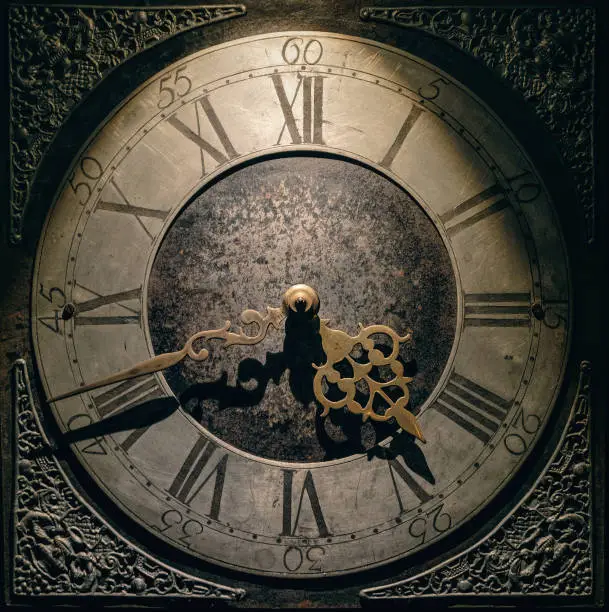
For a long time, human beings have been engaged in elaborate elaborations that were never-ending. In many instances, indeed, according to the author of the article, “riddles about time” are the cause of it. Behind the challenging questions they pose, these riddles contain profound thoughts about the very questions of existence, life, and the cycle of life and death. People who want to take a look back from the ancient myths to contemporary brain teasers can easily tell time-related riddles. They are puzzles that can be understood because it is so simple that one forgets they are simply presenting great ideas. They are pieces of an enigmatic puzzle that have descended through the ages from the ancient canyons of time. Therefore, time has always been a source of unsolvable puzzles around which cultures people of all times came together to find answers to. Just as a riddler may entertain through this medium, he may also give insight into the various ways past civilizations are probably the most popular stronghold of the game.
The Essence of Time in Riddles: A Historical Perspective
Even at the time of the traditional communal storytelling of ancient times, riddles should have been designed and used to trigger people’s thoughts. The Riddle of the Sphinx, a classic riddle from the ancient Greeks, which is a riddle featuring a humanoid creature and its adult New Year’s Day process, clearly states the progression of man through the many stages of his life. The riddle, “What is it that has legs? It walks on four legs in the morning, walks on two legs at midday, and walks on three legs in the evening” effectively delivers an existential discourse on the incessant circle of life and human agings. Riddles of comparable structure are found in the ancient Indian society and the medieval European civilization, while their perspective on the march of time is the same yet different.
The Universality of “Riddles with Time”
Riddles that are based on time are commonly found in various cultures worldwide, which confirms the fact that all peoples of the world have been intensely puzzled by the mysteries of time. Whether told in folk tales, written down in religious books, or expressed in philosophical dialogues, “riddles with time” lead individuals to ponder the fact of their coexistence within time limits. A few societies utilize the image of time as a wheel as a method to underlie its cyclical nature, which is not the case for the linear progression of time for other groups. In any case, the interest in measuring and knowing about time is a human behavior that is shared by humans.
The Paradox of Time in Logical Conundrums
Time riddles are an example of human exploitation of paradoxes and our perception of reality. Numerous riddles set up a contradiction or happenstance and are related to complicated real plants. A typical example of these riddles is where past, present, and future are mixed, so there is difficulty in distinguishing one from another. This perception manipulation is in contrast to our normal concept of time, which is expounded in the quote that “time is claimed to be entirely subjective and that it is full of malleable parts”.
Exploring the “Clock Riddle”: The Symbolism of Timepieces
Clocks very often represent the process of measuring a period. The “clock riddle” genre, for instance, often relies on providing clues to play time-related puzzles “×” integer operations. Clocks themselves with their consistent circular motion and set straight division from 60 (for the seconds/minutes) and 12 (for the hours) regarding the numbers appear to be ideal for the riddles dealing with the links between the seconds, minutes, and hours. These riddles show us that while time is a permanent element, the way we measure it is always a human invention. For example, there is more than a 24-hour day, which applies to this very concept.
Mythical Time Riddles: The “Time Riddle Hobbit” and Beyond
J.R.R. Tolkien’s The Hobbit includes a well-known temporal-based riddle. Here, Gollum tells Bilbo Baggins this anagram question: “This eats all, wolves, trees, flowers. Bites iron, scrapes steel; crushes hard gem to meal; kills king, destroys the town, and beats high mountain down.” The answer is time. It may also be called the time riddle hobbit—time respects no creature. The notion of time as an all-devouring destroyer is the main concept of many riddles, poems, and legends, which outlines the unstoppable march of time.
Why We Are Drawn to Riddles About Time’s Passing
Our intrigue with time-based riddles is a result of our deeper philosophical questioning: What is time and how does it affect our lives? Most of these riddles show us the fleeting nature of the present and call for our reflection on the importance of the present time. Through these fascinations, we engage with them, and existential questions are addressed in a fun way. Wrestling with time is like working through a riddle, both being attempts that can only be enjoyed and never completely figured out because they are constantly fascinating.
How Time-Based Riddles Reflect Scientific Thought
Besides the correlation of folklore and literature with the notion of time, many riddles are based on scientific principles. Time-related riddles and science theories are related to each other since they present new ways of thinking and coping with the matter of time. Thus, relativity, the arrow of time, and quantum mechanics challenge the normal interpretations of the past, present, and future. Skewed time and situations presented from two different time perspectives are what some riddles suggest. These riddles are quite similar to the psychedelic conundrums that modern physics deals with, which shows that time is one of the most intriguing aspects of the world.
The Psychological Appeal of “Riddle Answer Time”
One of the most exhilarating things about finding the answer to a riddle is that it comes in the “eureka” moment — the moment of sudden realization. It is not just “riddle answer time,” that should be considered a period for thinking of the outcome; it takes up the intellectual process of decoding meaning. The latter turns the allotted time-related riddles into a more fascinating activity that functions as the main channel for the fulfillment of our inherent desire to explore time. Solving a time-based riddle and anticipating the time process entertains as a kind of microcosm of the path that people follow in tracking the sequence of their existence.
Time Riddles in Modern Culture and Media
Now chemistry can turn to time pals well known among our favorite movies and TV series, video games, and indie writers. Time travel puzzles have always been a common theme in sci-fi and fantasy literature, challenging the characters to visualize or manipulate time in new and unique ways. The Doctor Who paradoxes and Inception time loops are the types of stories that are extensions of the themes in classic riddles found not only to entertain but also to leave the intellectual thoughts that enable us to ask questions.
How Riddles Help Us Conceptualize Time
Time is the abstract, and the riddles offer one of the tangible ways of having it. Riddles in time are some of how time is explained so that we can engage in the interaction of the part of it in a concrete way. Through the use of metaphor, analogy, wordplay, etc., time riddles not only simplify a complex phenomenon but also straighten it out into something that becomes quite transparent. They bring us in touch with the past, prompt us to think deep thoughts about the present, and ask us to predict the future. On a larger scale, they re-enlighten us that time is no longer an outside force; it is now as much the organ included in the human mind.
The Evolution of Time Riddles Through the Ages
From oral traditions to digital puzzles, time-based riddles have evolved together with human culture. In the past, human civilizations created riddles in order to transmit wisdom while different ones today serve as entertainment and sometimes as brain teasers and cognitive development tools. The incredible continuation of the questions over centuries confirms the observation that our obsession with time is undying.
Classic Time Riddles and Their Answers
The history of riddles has been marked by time as a playful yet complex maze to explore. Presented below are facts that are not often told and are associated with some of the most demanding and at the same time, interesting time-related riddles from different countries, which are now rewritten due to their clarity and originality:
The Second Riddle of the Sphinx
It turns out that two women belong to each other—one gives birth to the other, and the latter, in her turn, gives birth to the first one. What are they?
Answer: Day and night. The cycle of renewal is like day which joins with night, which in turn, makes the iron to be through the whole circle of life and begin endlessy again.
The 12-Spoked Wheel Mystery
One of the examples of a riddle that playfully interfaces with the enigmatic qualities of time is the following: A wheel with twelve spokes bears seven hundred and thirty kids, all born from one mother. What is it?
Answer: The year. Spokes are the representation of the months, also 730 terms are the result of a calculation of 365 days and 365 nights.
The Eternal Yet Elusive
It has never been in the past and yet it is everywhere in the future. Since it does not exist now, it will, nevertheless, come one day. What is it?
Answer: The future. The future does not exist in the present time but it is always near to come.
The Vanishing Arrival
It is withdrawal. They leave their arms waiting from a distance, and once they land, they merge with the elderly. What are they?
Answer: Space and time. The change of hour, on arrival, only serves to convey succinctly the joint experience of today and tomorrow; once today leaves, the former merges into the history of tomorrow.
The Relentless Traveler
It is the heart that beats tirelessly without any rest. What is it?
Answer: Our conscience and intelligence are always ours, it never stops, never pauses, only that we may think we stop. Everything, comes from another sense of being. Time is felt as the unfeeling, unchanging wall that infinitely stacks up before oneself and behind, coming from an infinite gap; that is, the wall is converted to ranged infinity, furthermore, the one beyond our imagination, it actually already started and even lasts now.
The Fleeting Now
It is already happening as we ponder the question; however, it is a time concept that fades away the instant we try to focus on it. What is it?
Answer: This idea of the present in the common Western perception confines time as an arrow shot in the range of unlimited distance that makes the present a temporary instant, but time is continuous, so the next moment becomes the present as it passes into the future.
The Lingering Past
It is a loss. It endures as an illusory influence in the minds of those who lived it. What is it?
Answer: The unfound. Though the past may have vanished and it might be a disadvantage at times, at least it teaches you something to build a more informed road for the future. In reality, life is not a timeline in this fractal universe, but a coherently evoking truth and harmony.
Horace Walpole’s Name-Changing Riddle
Before being born, I had a name. When I came into this world, I had another one. When I die, I acquire the same name my father had. I become three different persons in three days and remain one for only one day. What am I?
Answer: Now. Yesterday does not yet exist, so you called it tomorrow, it comes out today then turns into yesterday. In three days, three different names he did have.
Voltaire’s Timeless Enigma
What is both the longest and the shortest, the fastest and the slowest, the most looked down and the most important thing in life, which is something that if you do not use it, you cannot do anything and with it you can do everything but many did not?
Answer: The future. The future is perceptible in various ways by everyone individually, however, it directs everything.
Cleobolus’ Celestial Riddle
A single father has twelve children, each with thirty daughters. The daughters can be a whole spectrum of colors from light to dark, but all of them will eventually fade. What is this about?
Answer: The year. The father here is a metaphor for the year, and his twelve children are the months while the thirty daughters represent the days; the light portions symbolize the daytime and the dark ones are for the night.
Conclusion: The Enduring Legacy of “Riddles About Time”
“Riddles about time” are a vehicle for us to engage with our age-old inquiries like the meaning of our existence, aging, and the enigmatic cosmos. The enigma of riddles is not limited to any particular period, though time is one of the most intriguing riddle subjects. Riddles from the ancient epoch, golden era, and modern storytelling genres have acted as an intellectual link between the past and the present, touching our senses, mingling with our minds, and driving our consciousnesses toward contemplation of life’s biggest enigma: the time issue itself. As people continue to ponder their existence and their relation to time, time riddles will always be there to amuse us and show us those puzzling sides of our moving world.