
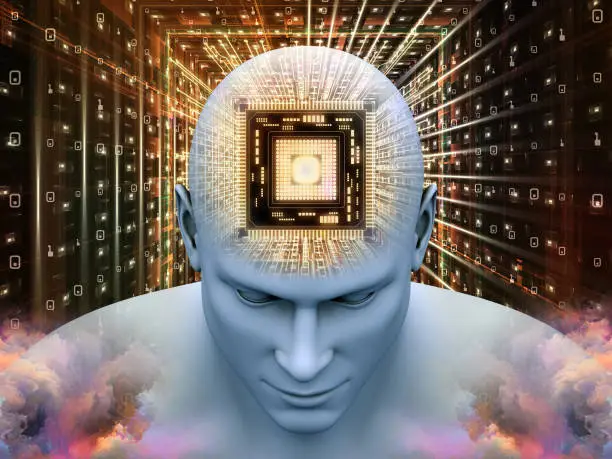
The question of “Does the brain drive you or do you drive your brain?” is quite thought-provoking amidst the information-overloaded world. A great number of individuals use their brains like hard drives, believing that they can store an unlimited amount of data without experiencing any negative effects. The thing is, the human brain is not a digital memory storage device. The matter at hand is not just the aggregation of data; rather, it is the way of processing, understanding, and applying. Given that we feed our brains with numerous signals, messages, and information that flows endlessly, it’s vital to know our brain’s functionality.
The mind is the source of the brain’s power. Here, the brain and the hard drive differ fundamentally, as the latter stores data in a different way. If information is converted into knowledge and wisdom, then it has value. The strange part is that the huge amount of data we consume usually does nothing but scatter and make us feel unproductive and confused. Similarly, the mind that is utilizing the brain’s potential requires the recognition of the strong and weak sides of the brain’s capabilities. The clarification of the “Does the brain drive you or you drive your brain” question is only possible if you know how to separate information storage from cognitive processing, which is effective.
Why Your Brain Isn’t a Hard Drive
The thought that the brain works in the same way as a hard drive is widely spread among people nowadays. The population treats their brains as storage facilities, where they place all the things in the hope that they will be remembered. According to the fact that the brain is actually for processing and understanding and not for storing, it becomes clearer that it is really a misunderstanding that it is just a data storage device.
The Similarities and Differences of Brain and Hard Drive
- Storage Limitations: While a hard drive can be fully defined with a certain amount of storage space, the brain operates not by accumulating data indefinitely but by processing them through networks and connections (states in which individual pages, paragraphs, sentences, or items of information are linked to each other).
- Data Processing: The human brain is incredibly effective at the fast establishment of links between information instead of the slow rinsing of the data only in separate areas (the right and left hemispheres of the brain).
- Changeability: A brick and mortar storage facility vs a living tissue which is capable to reorganize itself in the wake of the experiences is an analogy of the static digital storage and the brain, correspondingly.
The question: “Am I in control of my brain or is my brain in control of me? Who is driving?” … illustrates a basic lack of understanding of the functioning of cognition. The brain is not a travel vehicle where we are observers, it is our actions that make the brain work according to the way we store, classify and process information.
Implications of Treating Your Brain as a Hard Drive
Thinking of your brain as a storage unit can result in several mental and emotional difficulties with which one must grapple. When we bombard ourselves with information and do not take time to absorb and understand it, we feel that we are not creative and we are rundown. It is unfathomable and harmful to our mental health for us to think that we can remember or organize everything we go through.
When There Is Too Much Information
Each day, the average person is bombarded with a vast amount of information from sources such as emails, social media, articles, podcasts, and videos. Yet, if a lack of organization and concentration is there, this overflow of information may lead to mental exhaustion. Our brains are unable to extract understandable information as they go through unorganized texts, which in turn results in a state of bewilderment and irritation.
Lack of Focus
First of all, if we fill our head with an overabundance of facts, subsequently, it is going to be difficult for us to concentrate on what is most important. The uninterrupted inflow of data is overwhelming, consequently, we do not know which we have to attend to, though.
Reduced Creativity
Creative thinking is indeed triggered not by information overload but by the recognition and identification of the regularities and relations in this data. Our efforts to stuff the brain like a computer will only be a firewall against our capacity to think out new ideas and solve problems. Mental space is a necessity for creativity, and mental overload is anti-creativity.
On the one hand, the distinction “whether the brain is controlling you or you are controlling your brain” can be the trigger of the deviation from such ill sorts of thinking and can lead to the adoption of more productive and healthful methods for handling information.
The Brain’s Natural Strengths: Processing, Not Storing
Not a single human mind is ready to work in the way that stores information in a memory like a computer. On the contrary, it is quite good in creating relationships, discovering similarities in things, and inventing. Knowing these properties of the brain is crucial for fine-tuning the cognitive function and maintaining good spirits.
Pattern Recognition
A particularly outstanding characteristic of the brain is its ability to notice similarities and identical series of movements, thus helping the brain to make sense of information. Instead of making separate memories for every piece of information, the brain is wired to cluster similar bits. This operation is significant in making inferences, predicting events, and generating innovations.
Emotional Processing
Through the constant collaboration of different emotion centers, the brain, while keeping everything in mind, can easily be informed of what is going on. By engaging several brain systems, feelings make content more memorable than neutral circumstances would do. This emotional conditioning is very beneficial for learning, solving any kind of problem, and creativity.
Adaptive Learning
It is not correct to believe that the brain is static. It is a dynamic and adaptable organ. Neural plasticity is that fine feature of the brain that makes it possible for a person to react to new experiences and challenges by changing its organization. This malleability is a unique strength that digital storage systems cannot obtain.
The question “Does the brain drive you or do you drive your brain?” is a way of the situation recognizing that the brain only serves as an information processor and a center for adaptivity and not a store of information.
Building Systems That Work With Your Brain
Instead of behaving as if your brain were a hard drive, it could be better to create systems that harness the former’s natural strengths. By externalizing information to have it well organized, you can effectively reduce cognitive overload and increase creativity.
Externalizing Information
One of the most effective strategies, that works for many people’s cognitive performance, is getting information out of one’s mind really, and putting it into external systems. Just like a person cannot rely only on his/her brain to remember everything; similarly, a person should not rely only on his/her mind to realize and externalize triggers of ideas.
Tools for Externalization
- Mind Mapping: Unlike linear note-taking, the use of visual tools such as mind mapping to organize one’s ideas and connections is a more powerful way of maximizing the potential of one’s cognitive resources.
- Digital Repositories: The best of breed applications like Notion, Evernote, and Obsidian are the right places where users can have all their thoughts, ideas, and resources well organized.
- To-Do Lists: Tools like Todoist are available that help both in prioritizing and tracking tasks of a user’s status and also they free up the user’s brain to think creatively.
Comprehending “does the brain drive you or you drive your brain” needs a firm grip on the recognition that when to offload information to external systems has to be identified.
Using Your Brain for What It Does Best
Stop regarding your brain as a warehouse, and use it for tasks such as processing, creativity, and problem-solving. Then your potential will be unlocked in the real sense.
Enhancing Creativity
When the mind has the freedom to conceive without the constraints of storage, the more creative the ideas become. For instance, make use of brainstorming, free writing, and daydreaming to support your creativity.
Strengthening Problem-Solving
By storing information outside your brain, you can see problems more clearly and are, therefore, much better placed to address them. Good problem-solving entails finding links among similar yet different pieces of information and then somewhat applying these to new scenarios.
Improving Memory Through Meaning
Even though the brain does not work as a memory stick does, it is pretty good at remembering the information which has been endowed with meaning. For that, the best way is to not memorize the data in isolation, but to link it to broader ideas, feelings, or experiences.
Understanding “does the brain drive you or you drive your brain” is recognizing the fact that storage of data is not the main thing in memory; it is the development of meaning that is important.
Conclusion: Who Drives the Brain?
Above all, the answer to “does the brain drive you or you drive your brain” is to be found in the that is only by comprehending the brain’s operations that we can say who drives the brain. Naturally, the brain is quite efficient in terms of processing, however, it is not a hard drive. The futile attempt to use it that way can result in feeling overwhelmed, distracted, and much decreased creativity.
However, let’s focus on the strengths of the brain: its pattern recognition, emotional processing, adaptability, and creativity. Through the creation of systems that will support these capabilities, you will be able to improve the productivity, innovativeness, and mental health of the workforce. It would be wise to bear in mind that the brain is not a storage device—it is a changing, growing organ that can do fantastic things when it is made use of properly.