
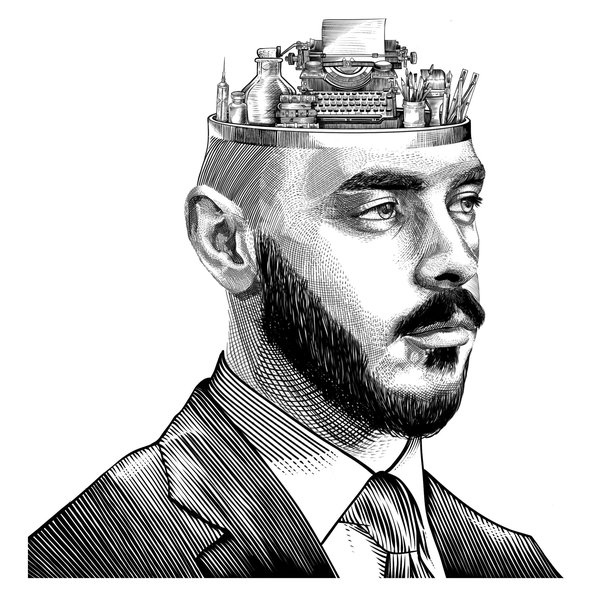
In a time when algorithms are at the forefront, niche expertise is progressing, and rapidly changing technology is happening. The “famous polymaths” are distinguished not by being experts in one field but by being masters in many. They are remarkable individuals who do not follow the traditional perception of specialization that one has to choose a profession and stick to it. Alternatively, the interdisciplinary nature of their research allows them to move seamlessly between fields, integrating science with art, engineering with literature, and business with social change. They are not generalists acquiring limited surface knowledge of the subject, but they dive deep—a trait that positions them as innovators and creators in any area of application.
The term “polymath” brings to mind the Renaissance geniuses such as Leonardo da Vinci, but polymathy is not a relic of the past. Actually, it is much more important today than ever. These polymaths are the rocket scientists of our age who will see patterns that are hidden from all others as they involve all the relevant expertise from different fields.
Let us now take a further look at the personalities of ten modern days who these rare, inspiring quality carry in their heart. Nonetheless, we should understand the word that connects them all before anything else.
Understanding the Modern Polymath
In order to properly respect the gifts of these people, the term “polymath” should be a point of departure us aficionados. A polymath is a “renaissance man” who is good at several different things for instance science, art, literature, and technology in the latest developments was brilliantly put forward.
So, What Does Polymath Mean in the 21st Century?
As the society of our days urges for change through the question “what does polymath mean”, people don’t gather skills merely by changing jobs, they are reconstructing them. They are creating entirely new paradigms by interpolating insights acquired in one area to another. They are the ones who solve the problems that the traditional roles and boundaries limit their creativity and innovations.
In simple words, a polymath is a person with the ability to think across different areas and work in various industries. They are the ones who can view typical connections that others can’t see.
If until now you ask yourself: “What is a polymath” Just imagine a person who can do many similar things, for example, he/she becomes a user experience designer, converts a design into an app, writes a Nobel prize-winning novel, plays, writes, and conducts the orchestra, and then finally runs a non-profit organization.
First off, let’s take a look at the top ten most inspiring “polymath examples” that are currently shaping the world.
1. Hedy Lamarr – Inventor, Actress & Wireless Communications Pioneer
Most people remember Hedy Lamarr solely for her good looks and Hollywood career. However, Hedy Lamarr was more than just a beautiful actress; she was one of the greatest scientific minds who co-invented, during World War II, a frequency-hopping communication system. This invention provided the foundation for today’s wireless technologies like Wi-Fi, Bluetooth, and GPS.
Lamarr was an Austrian-born actress who not only managed to escape from a complicated relationship but also eventually became one of the most iconic movie stars of the Golden Age. However, not everyone knows that behind the scenes, she spent her evenings on inventions. She also had several patents, and she, in collaboration with the composer George Antheil, invented defense technologies.
Her double occupation as an entertainer and an inventor is the primary reason she is one of the most undervalued polymaths in history—and the first person to unite imagination and ingenuity.
2. Mayim Bialik – Neuroscientist, Actress & Author
Mayim Bialik is quite likely one of the most identifiable “famous polymaths” for the younger crowd in today’s world. She holds a Ph.D. in neuroscience and is a successful actress, thus, she is an example that academic and creative lives can go together.
Among other things, along with her parenting articles, she participates in mental health advocate events, and collaborates with a podcast that covers topics such as psychology, relationships, and self-awareness. Bialik’s ability to be both fun and educational at the same time while using her fame is the best proof that intelligence variety is a great tool for creating cultural change.
3. Neil deGrasse Tyson – Astrophysicist & Pop Culture Icon
Neil deGrasse Tyson, through a combination of being an advanced communicator and an enlightened scientific mind, blends sophisticated physics with the mass media culture. As an astrophysicist, he has written many books and hosted the Cosmos series, which has made science interesting for a whole lot of people.
Tyson is as good at dealing with dark matter as he is debating sci-fi films or dilemmas in philosophy. The list of his jobs at different times includes research, writing, public speaking, and pop culture; thus, he is the one who shows the world how charisma, curiosity, and competence can freely flow across platforms.
4. Tim Ferriss – Author, Entrepreneur & Human Guinea Pig
The 4-Hour Workweek was the book that brought Tim Ferriss into the public view, but he does not appear to have been content with that. He’s written a couple of best-sellers on the theme of productivity, mental performance, and physical optimization. His own podcast is an in-depth study in polymathy where he interviews guests from different areas of life.
Ferriss is the true experimenter of life, exploring things from Japanese archery to psychedelics, chess, startup investment, and meditation, all while openly sharing his insights. He has managed to be the wind beneath the wings of millions of people discovering the unimaginable transformation of personal development by blending research, experimentation, and storytelling.
5. Natalie Portman – Actress, Producer & Academic
Natalie Portman’s talents are obviously not limited to just her Oscar-winning performances. Not only she is a Harvard graduate with a degree in psychology, but she is also fluent in a couple of languages, has written several academic papers and has even directed some critically acclaimed films.
Portman is a very strong advocate for social justice, environmentalism as well as gender equality. Her unique artistic storytelling approach which is infused with intelligence makes her to be one of the leading voices of her polymathic generation.
6. Jaron Lanier – VR Pioneer, Musician & Tech Philosopher
Jaron Lanier is the one who built the bridge between the physical and the virtual worlds. He is renowned for developing the term “virtual reality.” Nevertheless, his expertise is not confined to this area: Lanier is a philosopher, a first-class instrumentalist (his skills are recognized worldwide), an ethical digital researcher, and a futurist.
His books, which include You Are Not a Gadget and Ten Arguments for Deleting Your Social Media Accounts Right Now, are aimed at changing our perception of technology and its role in society. Lanier’s ability to be polymathic tells us that there is no future for tech without arts and philosophers just as much as with coders.
7. Mae Jemison – Astronaut, Physician & Dancer
Dr. Mae Jemison became a history-maker by being the first African-American woman to go to space. She is not only a medical doctor, a Peace Corps volunteer as well as a NASA astronaut but also the founder of a dance studio. She has given a performance of her own and has created choreography for it.
Her foundation, The Jemison Group, makes its mission the promotion of science education and sustainable technology. Jemison’s journey is an embellishment of the multi-disciplinary excellent skill of human beings—from the study of biology to looking for life on other planets or from a female choreographer to leadership.
8. Donald Glover – Actor, Musician & Director
Donald Glover, who is also known as Childish Gambino, is a person with multiple talents who perfectly fits the needs of our modern time. He is an Emmy award-winning actor, a Grammy-winning musician, and the showrunner of Atlanta; his versatility is truly staggering.
Moreover, he started his career with 30 Rock and has gradually perfected himself in stand-up comedy, voice acting (The Lion King), screenwriting, and directing. The excelling of his talent to transit from one domain to another with spontaneity and creativity is what makes Donald Glover one of the very few examples of true modern-day polymathy.
9. Brené Brown – Researcher, Storyteller & Educator
Dr. Brené Brown is a research professor at the University of Houston of Education, but more than her research, she is an experienced communicator and speaker. The impact of her TED talks, best-seller, and leadership programs have made the world a haven for the espousal of vulnerability and emotional intelligence.
Although her thoughts are based on different disciplines, she reveals a rare combination of the intellect, the sacred, the heart, and the spirit thereof. Her self-efficacy is in converting the outcome of a study into practical knowledge so that people benefit from it and feel it emotionally.
10. Brian May – Astrophysicist, Guitarist & Animal Rights Advocate
Together with the iconic quartet Queen, Brian May is a guitarist with the status of a rock star. With his Ph.D. in astrophysics, he has contributed to the discovery of the “zodiacal dust clouds” through his scientific papers and studies.
May’s polymathic lifestyle is accompanied by the way he fervidly stands for animal rights, writes sci-fi books and music albums, and also contributes to scholarly journals. His juxtaposition of musical genius and academic depth gives him a unique distinction among those practicing never-ending learning and the dexterity of their minds.
The Defining Traits of a Polymathic Mind
Polymaths are not just lucky; they make an effort. Here’s what sets them apart:
- Insatiable Curiosity – They don’t just ask questions—they make them better in any knowledge domain.
- Deep Work Ethic – They don’t settle for just being good—on the contrary, they go after mastery.
- Mental Flexibility – They are not only able to think creatively but also to learn from one field and apply the knowledge to another one.
- Open-Mindedness – They are ready to try new methods and are open-minded about the process of getting there.
- Vision – They grasp the bigger picture in what was and is currently that shows that imagination can forecast the future.
Why Polymaths Matter More Today Than Ever
Erratic convolutions and massive rifts are shaking the world and making difficulties that can’t be delineated that way “most consequential polymath.” Rather, that multitalented person’s ability to break through demarcation lines braids their ideas together. The likes of polymaths are beyond the scope of exclusiveness, and instead, they give birth to new concepts. They don’t create art to write academically but to express universal ideas. Who utilizes the same medium is irrelevant because the idea stands without ego verification.
Polymaths rock the boat: they demonstrate the fact that choosing one path is just a myth. The latter underlines that it is not a scientist or an artist, but it is a scientist and an artist, a public intellectual and an entertainer, or a philosopher and a coder.
How to Begin Your Polymathic Journey
Can you imagine a person who is the smartest and the most boring? Absolutely. A polymath is not born because of erudition, but what sets them apart is their curiosity. First, go out on your intellectual adventure by:
- Going for adjacent skills that will complement your current knowledge
- Dedicating time daily to read and meditate
- Supplementing hours with additional interrelated tasks
- Intermingling with people whose perspectives differ from your own
- Keeping coherent progress by recording your education and teaching it to your colleagues
It’s the small, apparently insignificant steps in unrelated directions that, in the end, will largely influence your development.
Conclusion
The lives of famous polymaths broke the perpetuating habit of thinking that we have a limit set between our potential and our capacity. Whether it’s Hedy Lamarr’s invention of a frequency-hopping communication system or Donald Glover’s reshaping of rhythm and music that is of a different genre, these people throw light on the real power of curiosity combined with determination.
Instead of one, make and cultivate your dearest hobbies. Try to rectify your error by walking in the footsteps of the polymaths who walked before you and in the direction of the path that is equally enjoined to others.
The idea of a “famous polymath” is not at all about the actual name—instead, it is about the permissiveness to be the same person at one moment and another one the next one, very strong, and real in all of humankind’s live styles.