
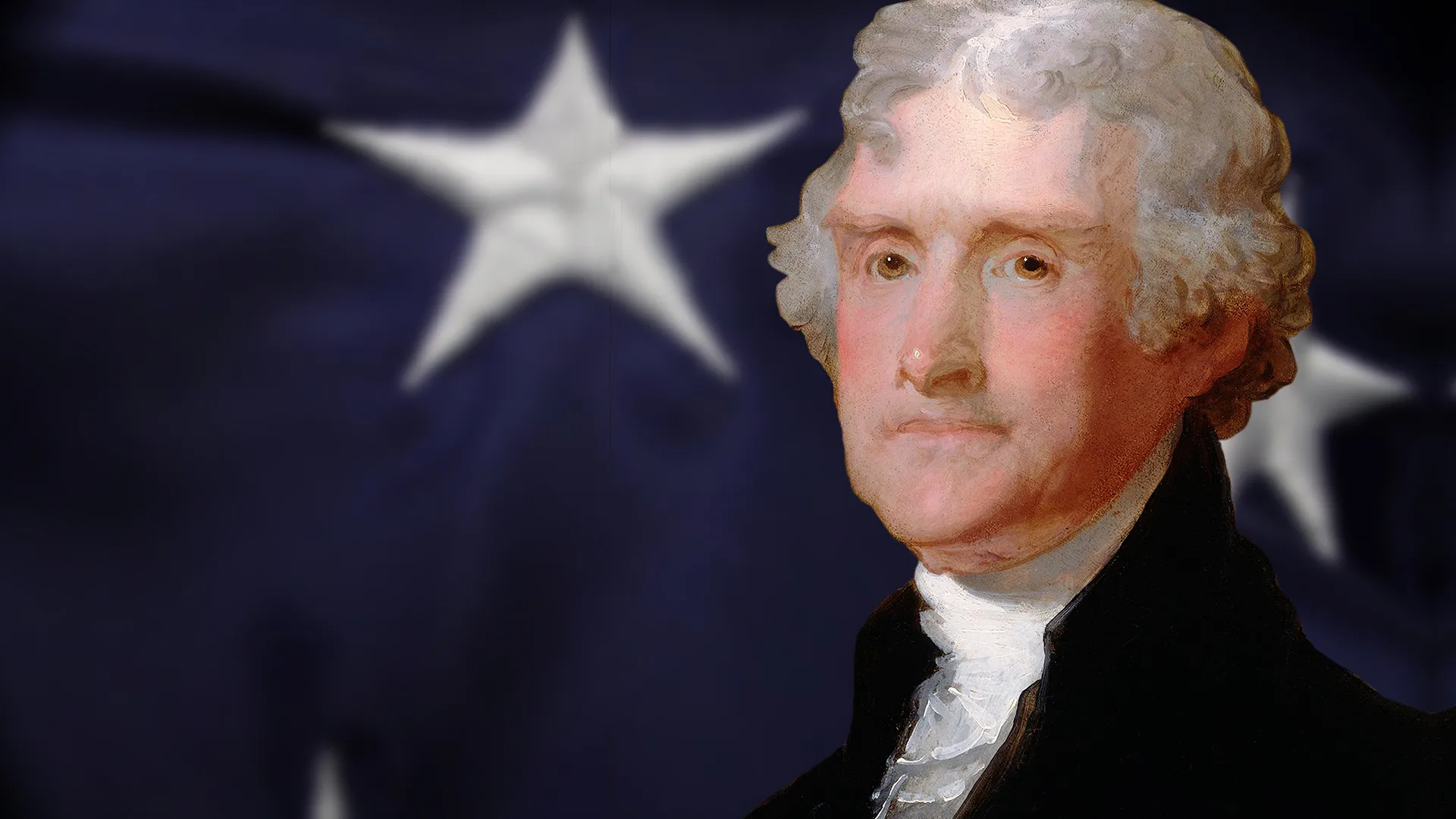
Thomas Jefferson, the third president of the United States, was far more than a statesman. His breadth of expertise across disciplines makes him one of the most celebrated polymaths in history. Today, when people aspire to be “interdisciplinary” or well-rounded, Jefferson’s life provides not only inspiration but a practical blueprint. Whether you examine his mastery in law, architecture, agriculture, linguistics, education, or music, Jefferson’s polymathic excellence shines through.
In a world that increasingly values niche expertise, revisiting the value of polymathy is essential. Jefferson’s story reminds us that deep curiosity, strategic learning, and consistent effort across disciplines can lead to transformational impact. As detailed in this guide to polymath thinking, it’s not just about learning different things but about seeing how they connect. Jefferson’s influence spans centuries because his way of thinking was both integrative and innovative. He understood that diverse knowledge could empower more just, creative, and prosperous societies.
Let’s take a journey into the mind and legacy of Thomas Jefferson—a man whose vast talents reshaped not just his nation, but the intellectual blueprint of modern leadership.
Who Was Thomas Jefferson?
To appreciate Jefferson’s polymathic legacy, it’s important to ask: “who was Thomas Jefferson”? Born in 1743 in Virginia, Jefferson was a lawyer, philosopher, linguist, architect, farmer, and inventor, all while playing key roles in shaping early American democracy. His life was defined by relentless intellectual exploration and civic duty. Jefferson didn’t simply dabble in many things—he mastered them.
As discussed in the course “Interdisciplinary and Polymath”, one critical trait of a polymath is a deep engagement with ideas across domains. Jefferson exhibited this from an early age, often rising at dawn to read and write across multiple languages and topics. His drive was not fueled by vanity, but by the belief that knowledge could empower a nation.
Jefferson’s Learning Systems: A Template for Polymathic Growth
One of Jefferson’s most overlooked but critical tools was his personal knowledge management system. He kept detailed journals, weather logs, memorandum books, and commonplace books—a kind of analog Zettelkasten. These practices allowed him to interconnect knowledge across disciplines, reinforcing insights and stimulating creativity.
He created and regularly used pocket-sized ivory notebooks bound with silver clasps, on which he made erasable pencil notes. At night, he would transfer them into more permanent volumes—a method demonstrating an intuitive understanding of active recall and spaced repetition.
As emphasized in “Become a Polymath in 5 Simple Steps”, organizing knowledge for retention and review is key to polymathic success. Jefferson applied this long before cognitive science caught up to confirm its benefits.
Language and Law: A Dual Track to Mastery
Jefferson’s linguistic skills extended far beyond his native English. He read Greek and Latin fluently and mastered Italian, Spanish, and French. He even compiled an Anglo-Saxon dictionary, enhancing his understanding of legal and historical texts. He believed that understanding the etymology of legal terminology made one a better interpreter of constitutional principles.
His linguistic pursuits were not academic luxuries—they were practical tools for governance and law. Jefferson’s legal mind was sharp, and language was his scalpel. This is especially relevant when we consider “what did Thomas Jefferson do in the American Revolution?” he drafted the Declaration of Independence, blending philosophy, political theory, and law into a compelling manifesto for liberty.
He didn’t stop at the theoretical. He applied these skills to abolish unfair laws like primogeniture, which concentrated wealth and power. Jefferson viewed this kind of reform as essential for a thriving republic.
Revolutionary Mindset and Visionary Politics
So, “what did Thomas Jefferson do” beyond writing a few key documents? A better question is: what didn’t he do? Jefferson was a transformative political figure who fought against laws like primogeniture, promoted religious freedom, and supported public education. His presidency saw the Louisiana Purchase, which doubled the territory of the United States, and he significantly advanced diplomatic relations with Europe.
As “3rd president” of the United States, he governed with an eye toward decentralization, scientific inquiry, and individual liberty. During his presidency, Jefferson also reduced national debt and abolished certain taxes—practical applications of Enlightenment economics.
More than symbolic leadership, “what did Thomas Jefferson do as president?” was to create an administration founded on rational governance, meritocracy, and a global perspective. He took inspiration from philosophers and scientists alike, incorporating data-based decisions and economic reforms that promoted trade and financial independence.
Architecture and Innovation: Building a Nation and a Legacy
Jefferson’s architectural genius is evident in Monticello and the University of Virginia, which he designed from the ground up. His architectural style was rooted in classical symmetry but adapted to the American context, blending practicality with philosophical ideals.
He read extensively on European architecture and employed advanced drafting techniques to draw out structures that symbolized both beauty and democracy. Jefferson personally sketched blueprints, optimized ventilation, and ensured spatial harmony within his buildings.
As a polymath, he didn’t just commission builders; he read architectural treatises, drew his plans, and even designed mechanical innovations like the polygraph (a copying machine using two pens). He also contributed to agricultural tools, most notably his moldboard plow, which was scientifically tested for efficiency.
This mirrors what is shared in this course on Personal Empowerment: polymathy fuels leadership through original thinking and grounded problem-solving.
Agricultural Excellence: Jefferson’s Experimental Garden
Jefferson maintained meticulous records in his “Garden Book,” detailing crop rotations, planting strategies, and even meteorological observations. This was not just a hobby. His garden was an experimental lab, exploring botany, soil chemistry, and sustainable farming.
He imported seeds and cultivated diverse plant species from around the world, demonstrating a global mindset in agriculture decades before it was fashionable. His documentation methods laid the foundation for early agricultural science in America.
Jefferson’s approach was empirical. He tracked successes and failures over decades, optimizing land use and pest control long before modern agronomy developed its theories. His methods have been replicated in permaculture models and educational botanical gardens today.
Music and Aesthetic Education
Jefferson considered music vital to education and the soul. He played violin regularly, studied composition, and ensured his children and grandchildren received formal musical training. Music was more than recreation—it was part of his intellectual ecosystem.
He exchanged musical instruments and musical theory with other polymaths like Francis Hopkinson, discussing mechanical enhancements for harpsichords and metronomes. Music was also a form of diplomacy. Jefferson entertained foreign dignitaries with musical performances, using art as a bridge across cultures.
This aligns with modern research that shows how musical training improves memory, spatial-temporal skills, and cognitive flexibility—traits all polymaths benefit from.
Educational Legacy: Founding the University of Virginia
Jefferson didn’t just theorize about education; he built institutions. He founded the University of Virginia not as a replica of existing European models, but as a secular, publicly funded university rooted in Enlightenment values.
He hand-picked faculty, designed curricula, and even oversaw construction. He intended to create free thinkers and informed citizens—people who could carry the republic forward.
His vision resonates with polymathic values: interdisciplinary learning, intellectual freedom, and a belief in education as a vehicle for societal transformation.
Jefferson as a Knowledge Curator
His library eventually formed the foundation of the Library of Congress. This was not a casual donation but a transfer of curated, categorized knowledge across languages, genres, and fields.
For Jefferson, knowledge was power, but also a public good. His library reflected the mind of a polymath—diverse, structured, and actively used.
As explained in SmartorFun’s article, true polymaths don’t just consume knowledge; they synthesize, share, and scale it for collective benefit.
Lessons from Jefferson for Today’s Learners
The beauty of Jefferson’s polymathy lies in its attainability. While we might not all become presidents or invent agricultural tools, we can:
- Create personal knowledge systems like journals or digital notebooks.
- Read across disciplines regularly.
- Play a musical instrument.
- Learn new languages.
- Cultivate intellectual curiosity about science, politics, art, and philosophy.
- Engage in physical and creative pursuits.
- Mentor and educate others to scale impact.
By adopting an interleaving study method—rotating between subjects—we boost retention and engagement. This technique, championed in Jefferson’s daily routine, helps integrate knowledge across fields.
Jefferson’s Humility and Growth Mindset
Despite his accolades, Jefferson resisted honorary degrees, preferring earned merit. He once said, “I like the dreams of the future better than the history of the past.” This attitude embodies a growth mindset and lifelong learning philosophy.
He believed that a free nation depended not on hierarchy but on educated citizens. By practicing modesty, encouraging debate, and engaging in civic projects, Jefferson modeled polymathy as both a personal and public virtue.
As you explore polymathic development, connect with communities like the KeyToStudy Facebook page for motivation, resources, and guidance.
Conclusion: Jefferson’s Enduring Influence as a Polymath
So, “what is Thomas Jefferson known for”? Beyond drafting foundational documents or serving as president, Jefferson is known for thinking holistically, acting strategically, and learning voraciously.
His polymathic journey is not just a historical artifact. It’s a living model of what it means to pursue excellence across domains. His life exemplifies that being a polymath is not about being a genius—it’s about being curious, consistent, and courageous in learning.
In a time where knowledge is more accessible than ever, we can all strive to embody Jefferson’s example. Learn widely. Reflect deeply. Apply boldly. And always keep a journal.